
Why Environment Friendly Disposable Plates Are the Future of Food Packaging
In 2026, sustainability is no longer a luxury or trend — it’s a necessity. As industries evolve and consumers become more eco-conscious, the food service sector in India is undergoing a massive shift. From high-end restaurants and quick-service outlets to caterers and cloud kitchens, more businesses are replacing plastic with Environment friendly disposable plates — and for good reason.
If you’re in the food business, this isn’t just a green move. It’s a smart, future-proof decision that aligns with your customers’ values, regulatory demands, and long-term operational efficiency. In this blog, we’ll explore why Environment friendly disposable plates are rapidly becoming the standard for food service packaging across India.
The Urgent Problem with Plastic
India generates over 3.4 million tonnes of plastic waste every year (CPCB, 2022), much of it coming from single-use food containers and plates. Traditional plastic plates take hundreds of years to decompose. Worse, they break down into microplastics that contaminate soil, water, and food chains.
In July 2022, the Government of India banned several single-use plastic items, including plastic cutlery, stirrers, and disposable plates, under the Plastic Waste Management (Amendment) Rules. This forced the food service sector to rethink its entire packaging and serving strategy.
The Rising Demand for Environment Friendly Disposable Plates
Today’s food businesses — whether small vendors or national chains — face pressure from both the government and eco-conscious consumers. Customers are now asking, “Is your packaging sustainable?”
A 2023 report by Deloitte India found that 73% of urban Indian consumers are willing to pay more for eco-friendly packaging. In cities like Bengaluru, Pune, and Delhi, this number rises to over 80% among Gen Z and millennial buyers.
This shift in consumer behavior is driving B2B buyers — caterers, QSR chains, food delivery companies, and hotels — to opt for Environment friendly disposable plates.
What Are Environment Friendly Disposable Plates?
Environment friendly disposable plates are made from natural, biodegradable materials that break down quickly after use. They’re designed to offer the same convenience as plastic — without harming the planet.
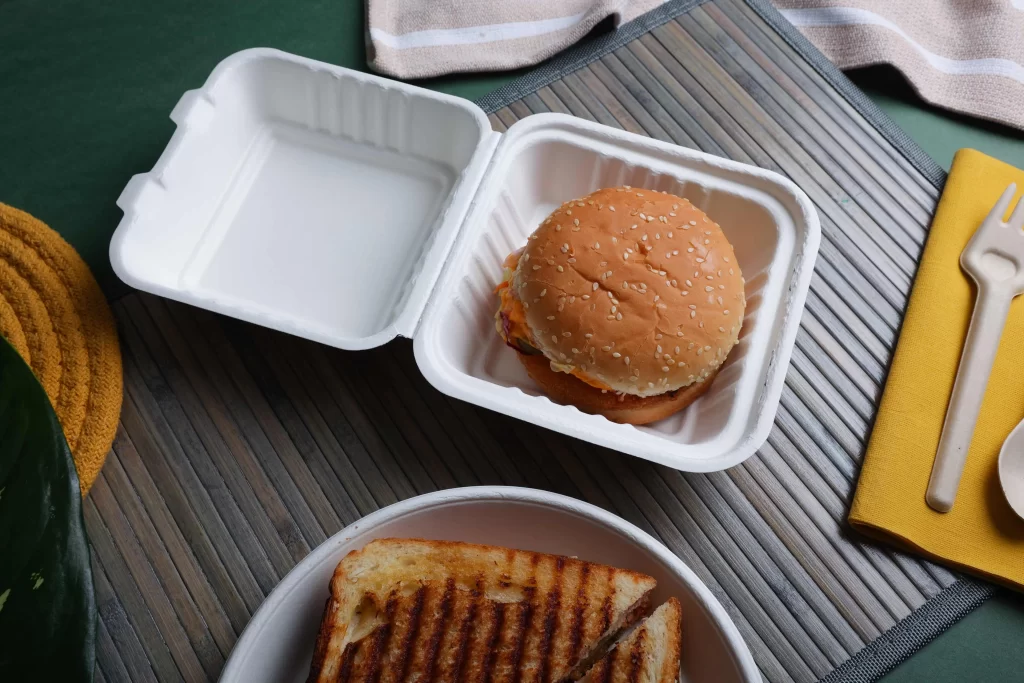
Some of the most common materials include sugarcane bagasse, which is the fibrous byproduct left after juice extraction. Instead of being discarded or burned, bagasse is now used to make sturdy, compostable plates that are grease-resistant and heat-friendly. Areca palm leaves are another sustainable option. Naturally shed by the tree, these leaves are cleaned and pressed into shape without chemicals. They offer a rustic and organic look, making them ideal for weddings and premium dining experiences.
Wheat bran, bamboo fiber, and compostable paperboard are also gaining popularity, especially among premium food brands. These materials are typically home-compostable and break down in 60 to 90 days, unlike plastic which lingers for centuries.
Why Food Businesses Are Switching to Environment Friendly Disposable Plates
They Meet Government Regulations
With India’s crackdown on single-use plastics, switching to Environment friendly disposable plates helps businesses stay compliant with local and national environmental laws. Municipal authorities in many cities have started levying fines for non-compliance, pushing even small vendors to go green.
They Align with Consumer Expectations
Modern consumers value brands that care for the planet. Using sustainable serving solutions shows that a food business is progressive, conscious, and trustworthy. This creates loyalty and enhances brand reputation.
They Are Safe and Non-Toxic
Unlike plastic, which can leach harmful chemicals into food when exposed to heat or oil, biodegradable plates made from bagasse or areca leaves are naturally safe. They contain no toxins, dyes, or plastic linings, making them suitable for all types of food.
They Improve Brand Experience
Eco-friendly plates not only function well but also look appealing. Whether it’s the smooth finish of bagasse or the rustic elegance of palm leaves, these plates can elevate the overall dining experience.
They Are Economical at Scale
When purchased in bulk, these plates are cost-competitive with plastic options. Manufacturers like Fomex Group India offer B2B pricing that supports large-scale supply, making it financially viable for caterers, hotels, and cloud kitchens.
They Minimize Waste and Disposal Issues
Eco-friendly plates are compostable, meaning they break down naturally in soil without releasing toxins. This reduces landfill pressure and simplifies waste management, especially for large-scale events or food service operations.
They Support ESG and CSR Goals
For large corporations and hospitality brands, switching to sustainable plates supports their environmental, social, and governance (ESG) frameworks. It also serves as a valuable point in Corporate Social Responsibility (CSR) reporting.
Real-World Example: Annapurna Caterers’ Green Transition
Annapurna Caterers, based in Hyderabad, made the switch from plastic to sugarcane bagasse plates in 2024. Initially hesitant about costs, they found the transition not only cost-effective but also beneficial to their brand image. Clients praised their eco-friendly approach, and they avoided regulatory fines. Waste disposal became simpler, and they now proudly market themselves as a green catering brand.
Bulk Buyers Are Leading the Change
In India, the largest adopters of Environment friendly disposable plates include:
- Wedding and event planners looking for elegant, eco-conscious alternatives
- Corporate cafeterias and IT parks adopting green food service models
- QSR chains and delivery platforms seeking sustainable packaging
- NGOs and religious institutions focused on eco-friendly mass meal distribution
- Government-sponsored meal schemes under Swachh Bharat and Mid-Day Meal programs
Why Sugarcane Bagasse Is the Most Preferred Material
Among all sustainable materials, sugarcane bagasse is the most widely adopted in India. The reasons are simple:
- India is the world’s second-largest sugarcane producer, ensuring steady supply of raw material
- Bagasse plates are durable, leak-proof, and microwave-safe
- They decompose naturally in composting conditions within two to three months
- Production is scalable for large manufacturing needs
This combination of performance, availability, and affordability makes bagasse plates a go-to choice for bulk food packaging.
India’s Regulatory and Market Push
The Indian government has been proactive in encouraging sustainable alternatives. Schemes like the Startup India Initiative and green certification programs support businesses adopting eco-packaging. Additionally, growing export demand for compostable products is opening new markets for Indian manufacturers.
According to a study by MarketsandMarkets, the global biodegradable tableware market is projected to grow from $4.5 billion in 2022 to $9.3 billion by 2030. India, with its manufacturing strength and large domestic demand, is expected to be a major contributor to this growth.
How to Start Using Environment Friendly Disposable Plates
If you run a food business and want to make the switch, here’s how you can start:
- Identify your specific needs: plate sizes, shapes, quantities
- Choose a certified and reliable manufacturer like Fomex Group India
- Request samples and test for heat, oil, and durability
- Place a bulk order and align your packaging and operations
- Promote your eco-friendly shift to your customers and stakeholders
Switching to Environment friendly disposable plates isn’t just about going green; it’s about staying relevant and responsible in a changing market.
Final Thoughts
In 2025, the shift toward Environment friendly disposable plates is not just a trend; it’s a transformation. The food service industry in India is embracing eco-packaging not only to comply with regulations but to lead the change toward a greener future. For B2B buyers, this change brings benefits beyond compliance: improved brand image, operational ease, customer trust, and long-term cost savings.
Whether you run a catering service, a hotel chain, or a cloud kitchen, now is the time to make the switch. Partnering with trusted manufacturers like Fomex Group ensures that you get quality, reliability, and sustainability — all in one plate.
Let your packaging speak for your values. Choose Environment friendly disposable plates, and serve your food with responsibility.