
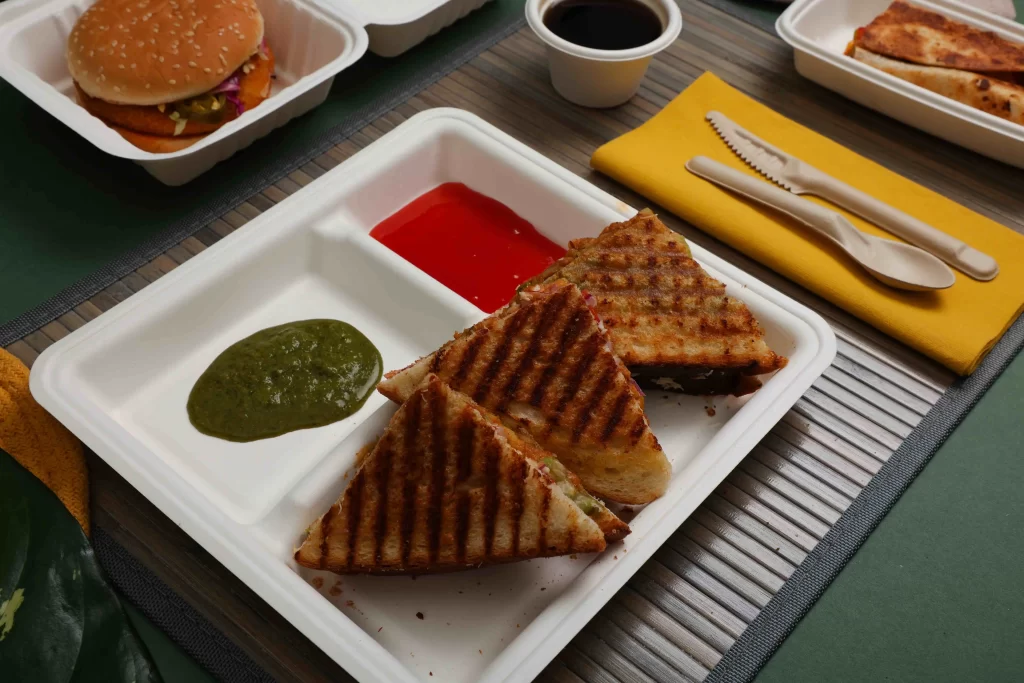
Every time you receive a delivery, grab a takeaway coffee, or attend an event with disposable plates, you’re interacting with packaging. But where does all that packaging go?
Unfortunately, most of it — especially plastic — doesn’t disappear. It sits in landfills, pollutes rivers and oceans, and can take centuries to degrade. As the global waste crisis intensifies, businesses and individuals alike are turning to environment friendly packaging solutions that offer both function and responsibility.
One material leading this change is sugarcane. More specifically, the fibrous residue called bagasse, which is now being used to create compostable packaging that performs like plastic but leaves no trace. In this guide, we’ll break down what makes sugarcane packaging a smart alternative, how it’s used, and why India is at the heart of this shift.
Understanding Environment Friendly Packaging Solutions
The term “environment friendly packaging” refers to materials designed to reduce harm to the planet. These aren’t just biodegradable — they’re often made from renewable sources, require less energy to produce, and break down naturally without releasing toxins.
In recent years, sugarcane bagasse has emerged as a frontrunner. It’s an agricultural byproduct that was once discarded but is now being repurposed into durable packaging items like plates, containers, cups, and cutlery. The result? A solution that’s sustainable, scalable, and surprisingly versatile.
But environment friendly packaging isn’t just about the material. It’s about the mindset: creating products that support a circular economy where nothing goes to waste.
Why Sugarcane Packaging Is Gaining Popularity
There are several reasons why environment friendly packaging solutions made from sugarcane are rapidly being adopted across sectors:
It’s biodegradable and compostable: Sugarcane packaging breaks down in 60–90 days in composting conditions, leaving behind no harmful residue.
It’s microwave and freezer safe: These products handle hot or cold food without warping or leaking.
It’s oil and water resistant: Ideal for food delivery and restaurant use.
It’s made from waste: Bagasse is a byproduct of the sugar industry, meaning no new resources are exploited.
It supports local agriculture: Especially in India, where sugarcane is abundantly grown.
This combination of environmental and practical benefits is what makes sugarcane-based packaging a truly powerful alternative to plastic.
Real-World Applications of Environment Friendly Packaging
From restaurants and retailers to individuals at home, environment friendly packaging solutions are now part of everyday life.
Imagine you run a busy cloud kitchen. Your meals are packed in sturdy containers that keep food warm, don’t leak, and don’t generate plastic waste. Not only does this appeal to eco-conscious customers, but it also sets your brand apart in a crowded market.
Or picture a skincare brand delivering its products in molded bagasse trays. Customers receive their order and instantly recognize your commitment to sustainability — not just in your ingredients, but in your packaging too.
Even at home, sugarcane-based plates and bowls are ideal for get-togethers, picnics, or everyday meals. They’re safe for kids, don’t contain BPA, and can be composted right in your backyard. Small changes like this make a big difference when repeated over time.
The Urgent Need for Plastic-Free Packaging
We’re producing more plastic than ever before — and using it faster than we can manage. Globally, over 380 million tons of plastic are produced each year. A significant portion comes from packaging, and most of it isn’t recycled.
The problem isn’t just volume — it’s longevity. A single plastic cup can persist in the environment for 500 years. That means nearly every piece of plastic ever produced still exists in some form.
Environment friendly packaging solutions offer a way out of this cycle. They give businesses and consumers a way to enjoy convenience without long-term consequences. And unlike many “greenwashed” alternatives, sugarcane packaging actually works — it’s practical, scalable, and genuinely sustainable.
India’s Role in the Packaging Revolution
As one of the largest sugarcane producers in the world, India is uniquely positioned to lead the global shift to sugarcane-based packaging. What was once agricultural waste is now fueling a new wave of innovation — and empowering rural economies along the way.
This shift supports the country’s sustainability goals, reduces dependency on plastic imports, and aligns with national regulations targeting single-use plastic bans. More importantly, it’s creating a business ecosystem where local materials, local talent, and local innovation come together for a global cause.
By choosing environment friendly packaging made in India, businesses not only lower their environmental impact — they also support homegrown progress.
Making the Switch with Fomex Group
At Fomex Group, we believe that packaging should serve more than a practical purpose — it should reflect your values. That’s why we’ve developed a full range of environment friendly packaging solutions made from sugarcane bagasse.
Our product line is tailored for restaurants, retailers, caterers, and conscious consumers who want performance without plastic. Whether you need sturdy plates, stylish takeaway containers, or compostable cutlery, we offer solutions that hold up to heat, resist grease, and still break down safely.
We work closely with clients across India to ensure that every packaging product isn’t just functional — it’s also a step forward in sustainability.
A Growing Impact: How Businesses Are Benefiting
Switching to environment friendly packaging solutions isn’t just good for the planet — it’s great for business. Companies that embrace compostable packaging are seeing positive feedback from customers, higher repeat rates, and even reduced compliance risks as plastic bans tighten.
Take the case of a fast-growing delivery kitchen in Mumbai. Within three months of switching to sugarcane-based packaging, they not only reduced their plastic output by 60% but also began using the shift as part of their marketing story.
A premium hotel chain in South India adopted bagasse trays for all room service orders. Guests took notice, and the brand saw a measurable improvement in customer satisfaction scores.
These stories are becoming increasingly common — and they prove that environment friendly choices can also be smart business decisions.
Final Thoughts: From Small Steps to Systemic Change
The packaging you choose matters — more than ever. Every box, cup, and tray you use is either contributing to the problem or helping solve it.
By switching to environment friendly packaging solutions, you’re reducing waste, supporting regenerative practices, and setting an example for others to follow. Whether you’re a business owner, product manufacturer, or simply someone looking to reduce their plastic footprint, sugarcane-based packaging is one of the simplest — and most powerful — changes you can make.
At Fomex, we’re here to make that change easier for you. Because we believe sustainability isn’t about perfection — it’s about consistent, thoughtful choices that add up to something bigger.
So next time you reach for a plate or pack a product, ask yourself: is this protecting what’s inside — or harming what’s outside?
With environment friendly packaging, you don’t have to choose.