

When you’re managing bulk catering for weddings, corporate events, institutions, or large food operations, disposable plates aren’t a small detail. They affect food presentation, hygiene, service speed, waste handling, and overall guest experience. Choosing the wrong plates can lead to spills, complaints, and unnecessary waste.
This guide explains the best disposable plate options for bulk catering, what materials work best, and how to choose plates that perform well at scale.
What Bulk Catering Really Needs From Disposable Plates
Before choosing a plate type, it’s important to understand the real requirements of bulk catering.
Disposable plates for catering must be:
Strong enough for full meals
Leak resistant for gravies and oily foods
Safe for hot food
Easy to stack and serve
Available in large quantities
Simple to dispose of responsibly
Cost matters, but performance matters more when you’re serving hundreds or thousands of people.
Sugarcane Bagasse Plates (Best Overall Choice)
Sugarcane bagasse plates are widely considered the best option for bulk catering today. They are made from natural fibers left after extracting sugarcane juice and molded into durable plates.
Why bagasse plates work best for catering
Strong and rigid
Handle hot, cold, and oily foods well
Do not bend easily under weight
Food-grade and chemical-free
Biodegradable and compostable
Bagasse plates are ideal for weddings, buffet service, outdoor events, and institutional catering where reliability is critical.
Compartment Disposable Plates (For Full Meals)
For catering menus that include multiple items such as rice, curries, bread, and sides, compartment plates are extremely useful.
Benefits of compartment plates
Keep foods separate
Improve presentation
Reduce the need for multiple plates
Speed up serving lines
Control portions effectively
Biodegradable compartment plates made from bagasse are commonly used in large events, hospitals, and corporate cafeterias.
Are Plastic Plates Still a Good Option?
Plastic plates were once common in catering due to low cost. However, they are becoming less suitable each year.
Problems with plastic plates
Can bend or crack with hot food
Not biodegradable
Increasingly restricted by regulations
Poor environmental impact
Negative perception among guests
For bulk catering operations planning long term, plastic plates are no longer the safest or most future-ready option.
Eco Friendly Disposable Plates for Events
More clients now expect eco friendly catering practices. Disposable plates made from natural materials help caterers meet these expectations.
Eco friendly plates:
Reduce plastic waste
Improve brand image
Align with sustainability goals
Simplify waste management
Using biodegradable plates is no longer just about compliance. It’s also about reputation.
Choosing the Right Plate Size and Design
For bulk catering, plate selection should match the menu and service style.
General guidelines
Small plates for snacks and starters
Medium plates for light meals
Large plates for full buffet meals
Compartment plates for multi-item menus
Premium finish plates for weddings and formal events
Always test plates with actual food before finalizing large orders.
Cost Considerations for Bulk Catering
Disposable plates for catering are usually purchased in bulk, which helps control cost.
Bagasse plates:
Slightly higher upfront cost than plastic in some cases
Better performance
Lower risk of spills and complaints
Better long term value
When calculated per event, high quality biodegradable plates often reduce overall operational issues.
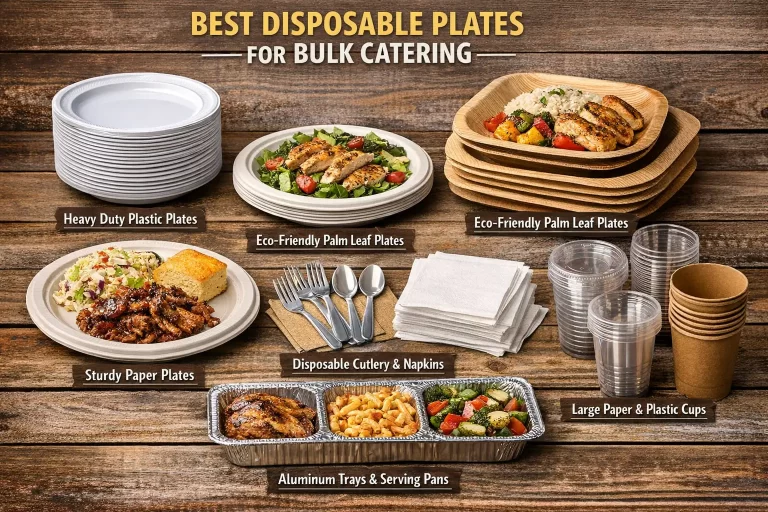
Best Disposable Plates by Catering Use Case
Weddings and large events
Premium biodegradable plates or compartment plates
Corporate and institutional catering
Standard bagasse plates or compartment plates
Outdoor and buffet service
Strong, leak resistant biodegradable plates
High volume takeaway meals
Compartment plates with sturdy construction
Final Recommendation
For bulk catering, sugarcane bagasse disposable plates are the best choice. They combine strength, food safety, sustainability, and professional presentation. Plastic plates may appear cheaper, but they come with performance, compliance, and perception risks.
Bulk catering demands reliability. Bagasse plates deliver it.