
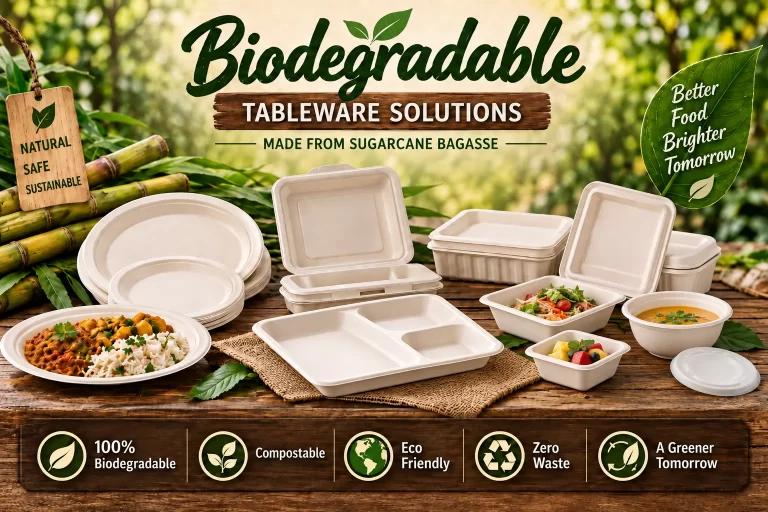
Packaging decisions are no longer just about cost and convenience. For many businesses, they now affect compliance, brand perception, and long term sustainability goals. As plastic restrictions increase and customers become more environmentally aware, biodegradable packaging solutions are becoming a practical business necessity.
This blog explains what biodegradable packaging is, why it matters for businesses, and how companies can adopt it without disrupting operations.
What Is Biodegradable Packaging?
Biodegradable packaging is made from natural or renewable materials that can break down naturally under proper conditions. Unlike plastic, it does not remain in the environment for hundreds of years or break into microplastics.
Common biodegradable packaging materials include:
Sugarcane bagasse
Molded plant fibers
Paper-based materials
Compostable natural fibers
These materials are widely used in food service, takeaway, catering, and institutional packaging.
Why Businesses Are Moving Away From Plastic Packaging
Plastic packaging was once the default choice due to low cost and availability. Today, it presents several challenges for businesses.
Key issues with plastic packaging:
Environmental pollution
Increasing government regulations
Disposal and recycling limitations
Negative customer perception
Long term compliance risk
For many businesses, continuing to rely on plastic packaging creates operational and reputational risk.
Benefits of Biodegradable Packaging for Businesses
1. Regulatory Compliance
Many regions now restrict or ban single use plastic packaging. Biodegradable packaging helps businesses stay compliant and avoid penalties or sudden supply disruptions.
2. Better Brand Image
Customers increasingly prefer brands that demonstrate environmental responsibility. Using biodegradable packaging sends a clear message about sustainability and corporate values.
3. Food Safety and Performance
High quality biodegradable packaging is:
Food-grade
Safe for hot and oily foods
Leak resistant
Strong enough for commercial use
Modern molded fiber packaging performs reliably in real food service conditions.
4. Waste Management Advantages
Biodegradable packaging:
Reduces landfill impact
Can be composted under proper conditions
Supports circular waste practices
Simplifies waste segregation
This is especially valuable for large food operations and institutions.
Common Biodegradable Packaging Solutions for Business
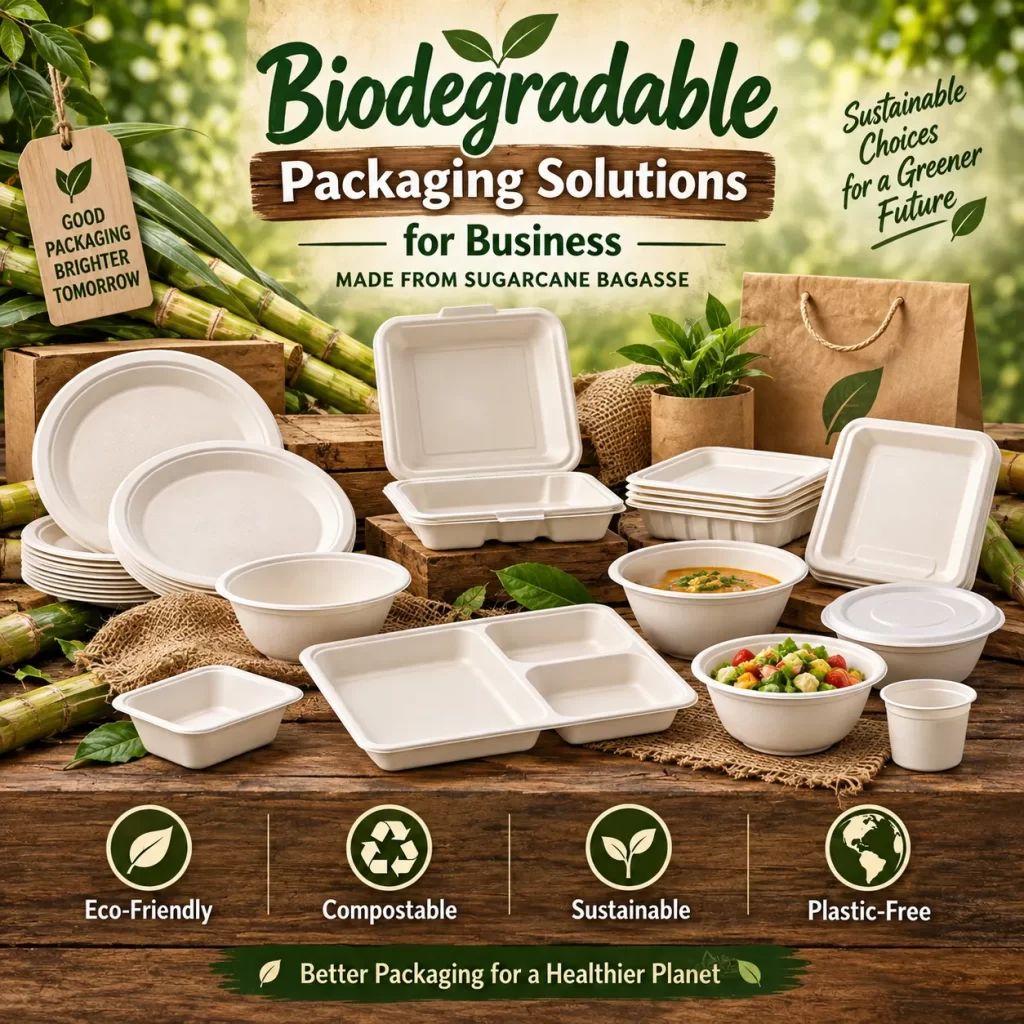
Biodegradable Plates and Tableware
Used in restaurants, catering, events, and cafeterias. Bagasse plates are strong, presentable, and suitable for full meals.
Food Containers and Takeaway Packaging
Biodegradable containers with secure seals are widely used for delivery and takeaway. They handle hot food while reducing plastic waste.
Clamshell Boxes
Ideal for fast food, meals, and delivery. Available in single and multi-compartment designs.
Bowls, Cups, and Dip Cups
Used for soups, curries, beverages, and condiments. Designed for hygiene and portion control.
Trays and Meal Trays
Common in institutional catering such as hospitals, airlines, and corporate cafeterias.
Is Biodegradable Packaging Cost Effective?
While biodegradable packaging may have a slightly higher unit cost in some cases, it offers better overall value.
Businesses benefit from:
Reduced regulatory risk
Improved customer trust
Fewer complaints related to leaks or weak packaging
Stronger long term positioning
At bulk scale, biodegradable packaging is increasingly cost competitive with plastic.
How to Choose the Right Biodegradable Packaging Partner
When selecting a packaging supplier, businesses should look for:
Manufacturing capability, not just reselling
Consistent quality and specifications
Food-grade and compliance standards
Bulk supply capacity
Export readiness if needed
Reliable supply matters more than short term price savings.
Final Thoughts
Biodegradable packaging solutions are no longer a trend. They are a practical and future ready choice for businesses in food service, catering, takeaway, and institutional operations.
By switching to biodegradable packaging, businesses can reduce environmental impact, improve brand perception, and prepare for stricter regulations without compromising performance.
Business Packaging FAQs
Biodegradable packaging solutions for businesses are packaging products made from natural materials like bagasse or molded fiber that break down naturally and replace plastic in commercial use.
Businesses should switch to biodegradable packaging to reduce plastic waste, meet environmental regulations, improve brand image, and offer safer food-grade packaging for customers.
Yes. High quality biodegradable packaging is designed to handle hot, oily, and moist foods without leaking or losing shape, making it suitable for commercial food use.
Biodegradable packaging helps sustainability goals by reducing plastic pollution, lowering landfill waste, supporting composting, and promoting the use of renewable materials.