
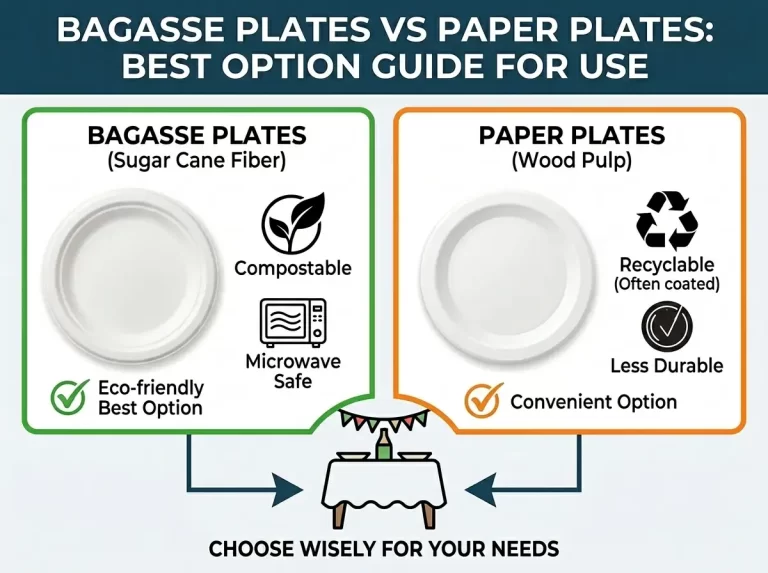
Choosing the right disposable plates is important for restaurants, catering companies, event organizers, food delivery businesses, and even everyday household use. While paper plates have long been a popular choice because of their affordability, bagasse plates are quickly becoming the preferred alternative due to their superior durability, food safety, and environmentally friendly properties. As businesses and consumers increasingly look for sustainable packaging solutions, understanding the differences between bagasse plates and paper plates is essential for making the right purchasing decision.
Bagasse plates are manufactured from sugarcane bagasse, a renewable agricultural byproduct, while paper plates are typically produced from wood pulp and may include coatings to improve moisture resistance. Although both are disposable options, they differ significantly in strength, heat resistance, leak protection, environmental impact, and overall performance for serving food.
In this comprehensive guide, you’ll discover the key differences between bagasse plates vs paper plates, including their durability, food safety, cost, environmental benefits, and suitability for parties, restaurants, catering services, and daily use. Whether you’re a business looking for reliable biodegradable tableware or an individual searching for eco-friendly disposable plates, this comparison will help you choose the best option for your needs.
What Are Bagasse Plates?
Bagasse plates are biodegradable disposable plates made from sugarcane bagasse, the natural fibrous residue left after extracting juice from sugarcane. Instead of being discarded as agricultural waste, bagasse is converted into durable, food-grade tableware through an advanced molding process that uses heat and pressure. This sustainable manufacturing process transforms a renewable byproduct into high-quality disposable plates suitable for a wide range of food service applications.
Unlike conventional plastic and thermocol plates, bagasse plates are made from natural fibers and are designed to provide excellent strength, heat resistance, and moisture resistance. Their sturdy construction allows them to hold hot meals, curries, oily foods, and desserts without easily bending or leaking, making them a reliable choice for both commercial and personal use.
Key features of bagasse plates include:
Made from renewable sugarcane bagasse
Biodegradable and compostable
Plastic-free and environmentally friendly
Suitable for hot, cold, dry, and oily foods
Heat and moisture resistant
Strong, durable, and leak-resistant
Safe for direct food contact
Today, bagasse plates are widely used by restaurants, cafés, catering companies, hotels, cloud kitchens, food delivery businesses, corporate cafeterias, and event organizers looking for sustainable disposable tableware that combines performance with environmental responsibility.
What Are Paper Plates?
Paper plates are disposable plates manufactured from paper pulp, which is primarily sourced from wood fibers. To improve their resistance to moisture, grease, and liquids, some paper plates are coated with a thin layer of wax, polyethylene, or other protective materials. They are widely used because they are lightweight, inexpensive, and convenient for serving food at casual gatherings and short-term events.
Paper plates are generally suitable for serving dry snacks, desserts, sandwiches, and light meals. However, their performance may vary depending on the quality of the material and the type of coating used. Lower-quality paper plates can soften or lose their shape when exposed to hot, oily, or gravy-based foods for extended periods.
Key features of paper plates include:
Made from paper pulp and wood fibers
Lightweight and cost-effective
Available in various sizes and designs
Suitable for dry and light food items
Convenient for single-use applications
Easy to transport and store
Commonly used for parties, picnics, and casual events
Paper plates remain a practical option for budget-friendly food service and everyday use. However, businesses that regularly serve hot meals, curries, oily foods, or takeaway orders often choose stronger alternatives such as bagasse plates for improved durability, food safety, and environmental sustainability.
Bagasse Plates vs Paper Plates: Key Comparison
Strength and Durability
Bagasse Plates
- Strong and sturdy
- Can handle heavy meals
- Suitable for hot, oily, and liquid food
Paper Plates
- Lightweight but less durable
- May bend or leak with heavy food
- Best for dry or light meals
Bagasse plates offer better durability for both parties and daily use.
Heat and Moisture Resistance
Bagasse Plates
- Resistant to heat and steam
- Does not lose shape easily
- Suitable for hot meals and gravies
Paper Plates
- Limited heat resistance
- May become soft with moisture
- Not ideal for liquid or oily food
Bagasse plates perform better for hot and wet food conditions.
Food Safety
Bagasse Plates
- Made from natural materials
- Non toxic when manufactured properly
- Suitable for direct food contact
Paper Plates
- Generally safe, but quality depends on coating and manufacturing
- Some coated plates may contain chemicals
Bagasse plates are considered safer for a wider range of food types.
Environmental Impact
Bagasse Plates
- Made from agricultural waste
- Biodegradable under proper conditions
- Reduces plastic usage
Paper Plates
- Made from wood pulp
- May contribute to deforestation
- Some coated plates are not fully biodegradable
Bagasse plates are more environmentally sustainable.
Cost Comparison
Paper Plates
- Lower upfront cost
- Suitable for low-budget use
Bagasse Plates
- Slightly higher cost
- Better durability reduces waste
For bulk use, bagasse plates offer better value due to performance and sustainability.
Why Businesses Are Switching from Paper Plates to Bagasse Plates
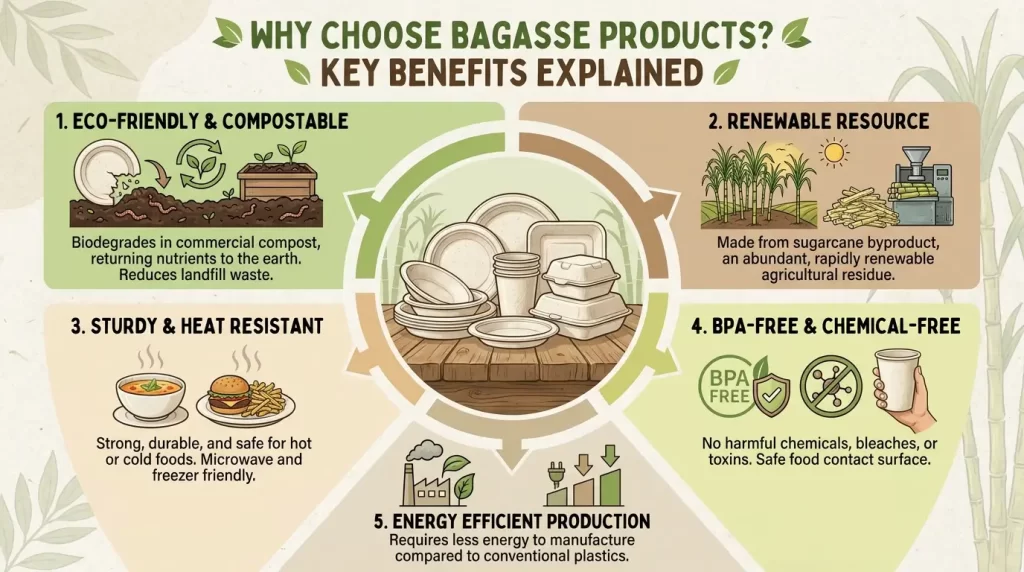
As sustainability becomes a priority across the food service industry, many restaurants, cafés, catering companies, hotels, and food delivery businesses are replacing traditional paper plates with bagasse plates. While paper plates remain suitable for light-duty applications, bagasse plates offer greater durability, improved food safety, and better performance for serving hot, oily, and moisture-rich foods.
One of the biggest reasons for this shift is the growing demand for eco-friendly food packaging. Consumers increasingly prefer businesses that use biodegradable disposable tableware, while government regulations on single-use plastics and sustainable packaging continue to encourage the adoption of environmentally responsible alternatives. Bagasse plates, manufactured from renewable sugarcane bagasse, help businesses reduce plastic waste while supporting their sustainability goals.
Bagasse plates also provide practical advantages for commercial food service. Their strong molded fiber construction resists heat, grease, and gravy better than many conventional paper plates, making them ideal for restaurants, cloud kitchens, catering services, and takeaway operations. This helps improve food presentation, reduces the risk of leaks, and enhances the overall customer experience.
For businesses looking to balance performance, sustainability, and long-term value, bagasse plates have become the preferred choice over traditional paper plates. They not only support environmentally responsible operations but also deliver the strength and reliability required for modern food service applications.
Best Option for Parties
Bagasse plates are the preferred choice for parties because they:
- Handle heavy and diverse food items
- Maintain shape during long events
- Offer a premium look
- Support eco friendly event planning
Paper plates may be suitable for light snacks or small gatherings.
Best Option for Daily Use
For daily use, bagasse plates provide:
- Better durability
- Safe use for hot meals
- Reduced environmental impact
Paper plates can be used for quick and light meals but may not be suitable for regular heavy use.
Industries Using Bagasse Plates
Bagasse plates are widely used across the food service industry because they combine durability, food safety, and environmental sustainability. Their ability to handle hot meals, oily foods, curries, and moisture-rich dishes makes them a preferred choice for businesses that require reliable disposable tableware.
Restaurants and Cafés
Restaurants and cafés use bagasse plates to serve breakfast, lunch, dinner, snacks, and takeaway meals. Their sturdy construction helps maintain food presentation while reducing the risk of leaks during dine-in and takeaway service.
Catering Companies
Catering businesses rely on bagasse plates for weddings, corporate events, exhibitions, festivals, and large social gatherings. These biodegradable plates can comfortably hold a variety of hot and heavy meals, making them ideal for high-volume food service.
Hotels and Resorts
Hotels and hospitality businesses use bagasse plates for buffet services, outdoor events, room service, and eco-friendly dining initiatives. Their premium appearance and reliable performance enhance the overall guest experience.
Cloud Kitchens and Food Delivery Services
Cloud kitchens and food delivery businesses require packaging that can withstand transportation without becoming weak or leaking. Bagasse plates provide excellent strength and moisture resistance, helping preserve food quality during delivery.
Corporate Offices and Educational Institutions
Corporate cafeterias, schools, colleges, and universities increasingly choose bagasse plates as part of their sustainability initiatives. They offer a practical solution for serving meals while reducing the use of single-use plastic products.
Street Food Vendors and Fast Food Outlets
Street food vendors and fast food businesses use bagasse plates for serving fried snacks, chaats, curries, noodles, and other hot meals. Their leak-resistant and heat-resistant properties make them suitable for busy food service environments.
Event Management Companies
Event organizers prefer bagasse plates for weddings, parties, exhibitions, trade shows, and public events because they combine durability with an eco-friendly image. They help create a cleaner and more sustainable dining experience for guests.
When to Choose Paper Plates
Paper plates are suitable when:
- Serving dry snacks
- Budget is the primary concern
- Short-term use is required
They remain a practical option for simple applications.
When to Choose Bagasse Plates
Bagasse plates are ideal when:
- Serving hot and oily food
- Hosting large events
- Running food service operations
- Prioritizing eco friendly packaging
They offer better overall performance and sustainability.
Growing Demand for Sustainable Disposable Tableware
The demand for sustainable disposable tableware is growing rapidly as businesses and consumers become more aware of the environmental impact of single-use plastic products. Governments around the world are introducing stricter regulations on plastic packaging, encouraging restaurants, hotels, catering companies, and food delivery businesses to adopt biodegradable alternatives.
Bagasse plates have emerged as one of the leading eco-friendly solutions because they are manufactured from renewable sugarcane bagasse, an agricultural byproduct that would otherwise go to waste. Their biodegradable and compostable properties help reduce landfill waste while supporting responsible waste management practices.
In addition to environmental benefits, sustainable disposable tableware helps businesses strengthen their brand image and meet the growing expectations of environmentally conscious customers. As the food service industry continues to embrace greener practices, bagasse plates are becoming the preferred choice for restaurants, cafés, cloud kitchens, corporate cafeterias, hotels, and event organizers seeking durable and sustainable food packaging solutions.
Why Choose Fomex Group India for Bagasse Plates
Fomex Group India is a trusted manufacturer and supplier of premium-quality bagasse plates and biodegradable tableware for businesses across India and international markets. With advanced manufacturing facilities and a commitment to quality, we produce durable, food-grade products that meet the evolving needs of the food service industry.
Our bagasse plates are manufactured from high-quality sugarcane bagasse using modern molding technology to ensure excellent strength, heat resistance, and moisture resistance. Every product is designed to deliver reliable performance for restaurants, catering companies, hotels, food delivery businesses, distributors, wholesalers, and event organizers.
Our product range includes:
Round Bagasse Plates
Compartment Plates
Bagasse Bowls
Meal Trays
Food Containers
Bagasse Cups
Complete Biodegradable Tableware Solutions
Whether you require bulk quantities for domestic distribution or export markets, Fomex Group India offers dependable manufacturing, consistent product quality, timely delivery, and sustainable packaging solutions that help businesses transition toward environmentally responsible food service.

Conclusion
When comparing bagasse plates vs paper plates, bagasse plates clearly stand out as the better choice for restaurants, catering companies, food delivery businesses, event organizers, and everyday users who need durable and sustainable disposable tableware. Their superior strength, excellent heat and moisture resistance, food-grade safety, and biodegradable composition make them ideal for serving hot meals, curries, oily foods, and heavy dishes without compromising performance.
While paper plates remain a practical and affordable option for serving light snacks and dry foods, they may not provide the same level of durability or reliability for demanding food service applications. Businesses looking to improve customer satisfaction, reduce plastic waste, and support environmentally responsible packaging can benefit from switching to high-quality bagasse plates.
If you are looking for a trusted bagasse plate manufacturer in India, Fomex Group India offers a comprehensive range of premium-quality biodegradable plates, bowls, meal trays, food containers, and sustainable tableware solutions. Designed for domestic and international markets, our products combine strength, food safety, and eco-friendly performance to meet the evolving needs of modern food service businesses.