
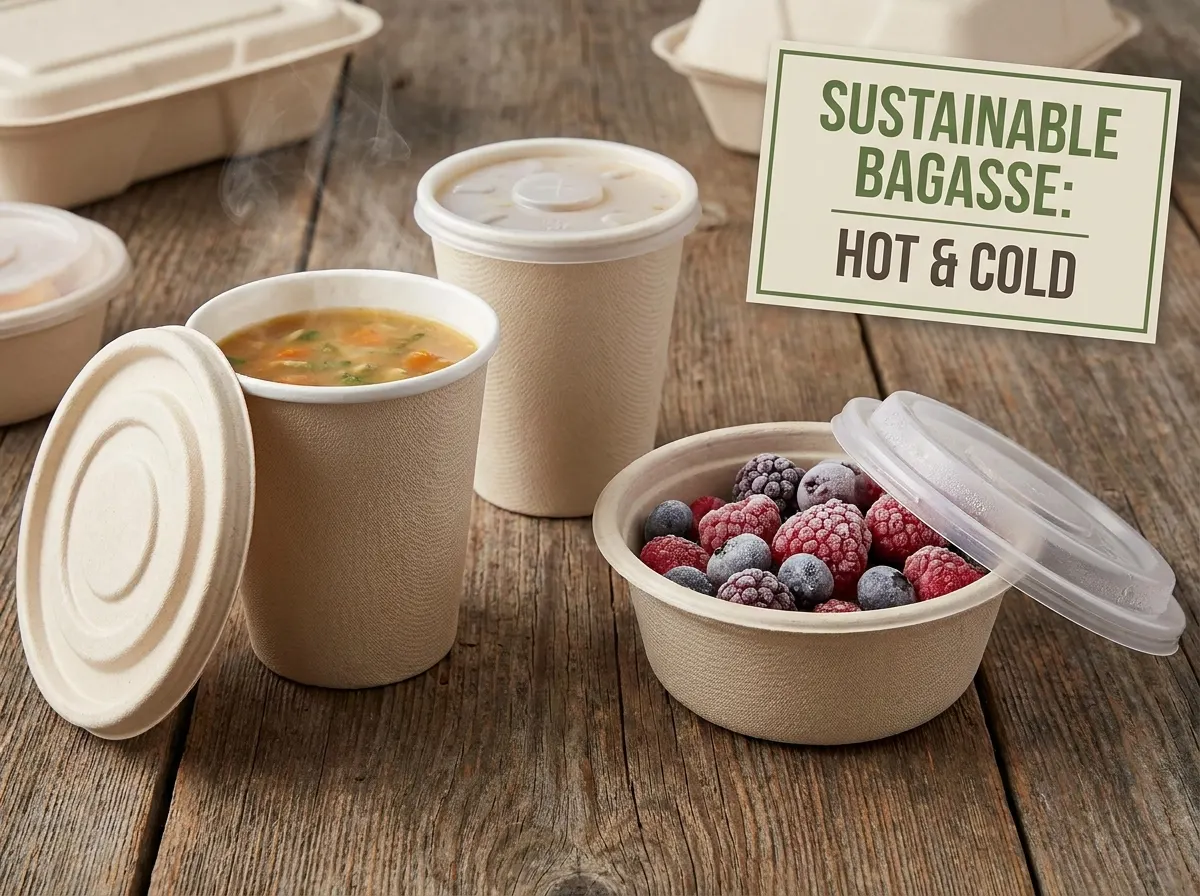
Many restaurants, food delivery businesses, and catering companies are switching to biodegradable food packaging. However, one common concern is whether bagasse containers can safely handle hot liquids, oily meals, and frozen foods without leaking or losing strength. This blog explains how bagasse containers for hot liquids and frozen foods perform under different food service conditions and why they are widely used in modern packaging.
You will learn what bagasse containers are, how they handle temperature extremes, their food safety properties, advantages over plastic packaging, and best use cases for restaurants and takeaway services.
Why Temperature Resistance Matters in Food Packaging
Temperature resistance is one of the most important factors when selecting food packaging for restaurants, catering services, and food delivery businesses. Food containers must maintain their shape and performance when exposed to hot meals, soups, frozen foods, and refrigerated products.
Poor-quality packaging can leak, soften, or crack when exposed to temperature changes. This not only affects food quality but can also negatively impact customer satisfaction. Bagasse containers have become a preferred solution because they offer excellent heat resistance and cold storage performance while supporting sustainable packaging initiatives.
As more businesses move toward eco-friendly food packaging, temperature-resistant bagasse containers are helping replace traditional plastic packaging across the food service industry.
How Bagasse Containers Handle Hot Foods and Beverages
Bagasse containers are manufactured using compressed sugarcane fibers that create a strong and durable structure. This allows them to handle a variety of hot food applications without losing their shape.
They are commonly used for:
Curry and gravy dishes
Rice meals
Noodles and pasta
Steamed foods
Freshly prepared takeaway meals
The natural fiber composition helps maintain container stability while protecting food quality during serving and transportation. This makes bagasse food containers a reliable option for restaurants and takeaway businesses.
Benefits of Using Bagasse Containers for Frozen Food Storage
Frozen food packaging requires containers that can withstand low temperatures without becoming brittle or damaged. Bagasse containers perform effectively under refrigerated and frozen conditions, making them suitable for meal preparation companies, frozen food manufacturers, and food delivery businesses.
Benefits include:
Stable structure during freezing
Suitable for refrigerated storage
Moisture-resistant performance
Eco-friendly alternative to plastic trays
Safe for frozen ready-to-eat meals
These qualities allow businesses to use a single sustainable packaging solution for both hot and cold food applications.
Bagasse Containers vs Plastic Food Containers
Businesses often compare bagasse packaging with traditional plastic containers when selecting food packaging solutions.
Bagasse Containers
Biodegradable and compostable
Made from renewable sugarcane bagasse
Suitable for hot and cold foods
Microwave safe
Environmentally responsible
Helps reduce plastic waste
Plastic Containers
Non-biodegradable
Made from petroleum-based materials
Contribute to long-term landfill waste
Growing restrictions due to environmental regulations
Limited sustainability benefits
For businesses seeking eco-friendly food packaging, bagasse containers offer a practical combination of durability, performance, and environmental responsibility.
Industries That Benefit from Bagasse Food Containers
The versatility of bagasse containers makes them suitable for a wide range of industries.
Restaurants and Quick Service Restaurants
Restaurants use bagasse containers for takeaway meals, combo meals, soups, curries, and food delivery packaging.
Cloud Kitchens
Cloud kitchens require reliable packaging that maintains food quality during transportation. Bagasse containers provide excellent performance for delivery-based food businesses.
Catering Services
Large-scale catering companies use biodegradable food containers for weddings, corporate events, and social gatherings.
Frozen Food Manufacturers
Frozen meal producers use bagasse packaging for ready-to-cook and ready-to-eat food products.
Hotels and Hospitality Businesses
Hotels increasingly adopt compostable packaging as part of their sustainability initiatives and environmental commitments.
Food Safety Advantages of Bagasse Containers
Food safety remains a critical concern for every food service business. Bagasse containers are manufactured using natural sugarcane fibers and are designed for direct food contact applications.
Key food safety benefits include:
Suitable for hot and cold foods
Free from many petroleum-based materials
Strong structural stability
Safe for takeaway and delivery packaging
Reliable performance under normal food service conditions
These benefits make bagasse containers a preferred packaging choice for businesses that prioritize both sustainability and food quality.
Fomex Group India Bagasse Food Packaging Solutions
Fomex Group India manufactures high-quality bagasse containers and biodegradable food packaging products designed for commercial food service applications. Our products are engineered to deliver strength, durability, and temperature resistance while supporting environmentally responsible packaging practices.
Our product range includes:
Whether you operate a restaurant, catering company, cloud kitchen, or food delivery business, Fomex provides eco-friendly packaging solutions designed for modern food service requirements.
Future of Sustainable Food Packaging
The global food packaging industry is rapidly moving toward biodegradable and compostable alternatives. Governments, businesses, and consumers are increasingly focused on reducing plastic waste and adopting sustainable packaging materials.
Bagasse containers represent one of the most effective solutions available today because they combine performance, convenience, and environmental responsibility. Their ability to handle both hot and frozen foods makes them an ideal choice for businesses looking to transition away from plastic packaging without sacrificing quality or functionality.
Best Practices for Using Bagasse Containers
To maximize performance:
- Use food grade certified containers
- Avoid extremely long liquid storage durations
- Follow supplier temperature guidelines
- Store containers in dry conditions before use
Proper handling improves durability and food safety.

Conclusion
Bagasse containers are designed to handle both hot liquids and frozen foods effectively. Their natural fiber composition, heat resistance, and moisture tolerance make them suitable for restaurants, takeaway services, food delivery businesses, and frozen food packaging.
As demand for sustainable packaging grows, bagasse containers continue to offer a reliable and eco friendly alternative to plastic food packaging. When sourced from reliable manufacturers, food grade bagasse containers provide strong performance across a wide range of food service applications.