
Planning food service for a large event involves more than choosing a menu. The right catering supplies need to handle hundreds or thousands of meals while supporting food safety, efficient service, and responsible waste management. Compostable plates for large events have become a practical alternative to conventional plastic and foam tableware, particularly for weddings, corporate events, festivals, catering operations, and institutional gatherings.
But not every compostable plate offers the same strength, design, or performance. The material, size, construction, food compatibility, and supply capacity all matter.
This guide explains how to choose the right compostable plates for large-scale catering.
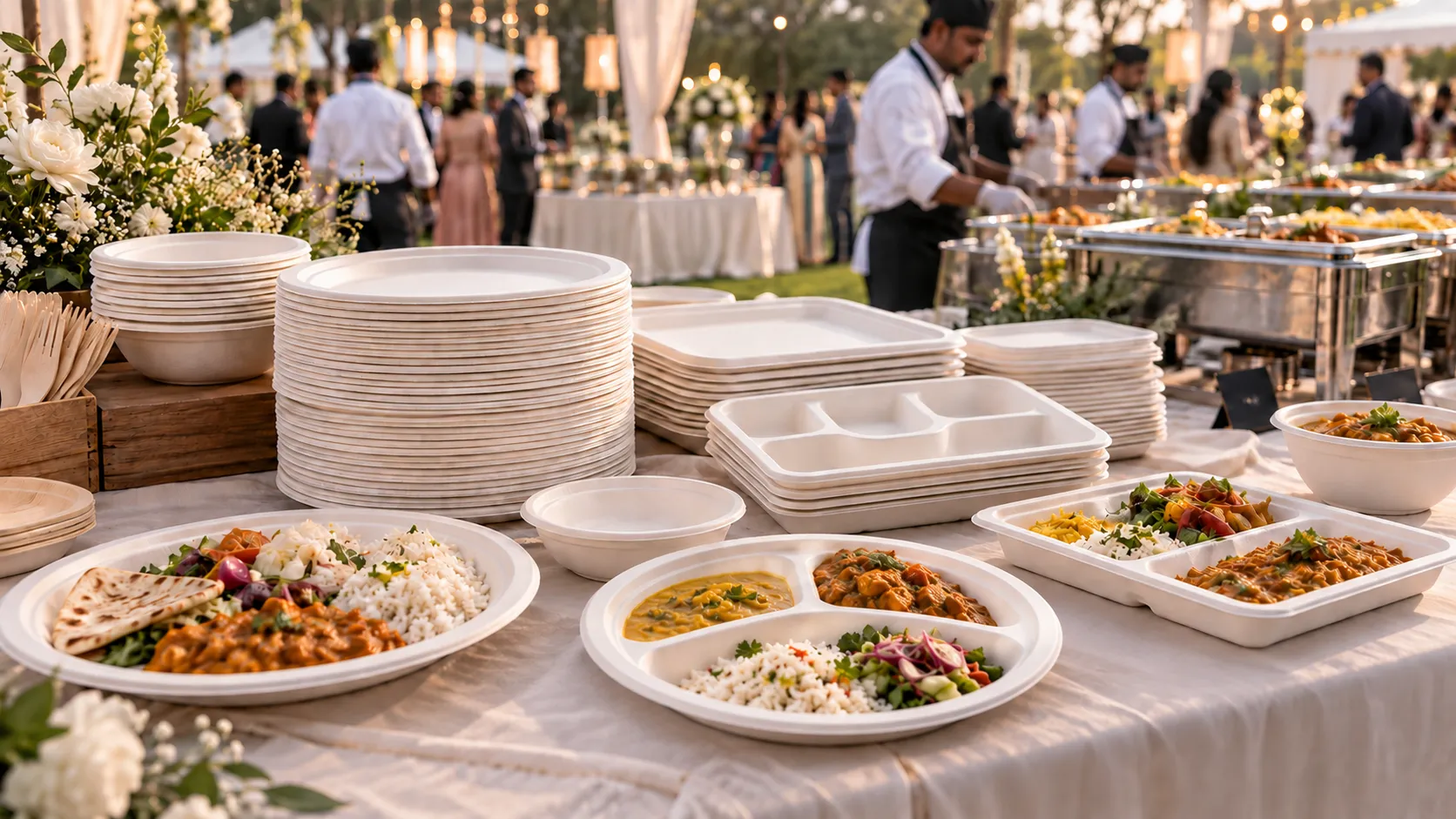
Why Compostable Plates Make Sense for Large Events
Large events can generate a significant amount of disposable food service waste in a short period. Traditional plastic plates can create disposal challenges because they don’t readily biodegrade and may be difficult to recycle after contact with food.
Compostable plates made from suitable plant-based materials offer another option.
For event organizers and caterers, the potential benefits include:
- Reduced reliance on conventional plastic tableware
- Better alignment with sustainability goals
- Convenient disposable food service
- Suitable options for hot and cold meals
- Easier handling and stacking
- Professional presentation for guests
The goal isn’t simply to choose a plate labeled “eco-friendly.” The plate also needs to work properly throughout the event.
What Are Compostable Plates?
Compostable plates are disposable plates made from materials that can break down into compost under appropriate composting conditions.
One commonly used material is sugarcane bagasse. Bagasse is the fibrous residue left after sugarcane juice extraction. It can be processed and molded into plates, bowls, trays, and other food packaging products.
Depending on the manufacturing process and product specifications, bagasse plates can provide the rigidity needed for commercial food service.
It’s important to distinguish between biodegradable and compostable. Biodegradable describes a material’s ability to break down naturally, while compostable products are designed to break down under defined composting conditions. Buyers should check the manufacturer’s product specifications and relevant certifications rather than assuming every plant-fiber product has identical end-of-life performance.
Key Factors When Choosing Compostable Plates for Large Events
1. Choose the Right Material
Material affects strength, appearance, food compatibility, and disposal requirements.
For large-scale catering, common considerations include:
Sugarcane bagasse:
A popular molded-fiber option that provides a sturdy structure and works well for many food service applications.
Paper-based plates:
Lightweight and useful for certain dry or lighter foods, although construction and coating can affect performance.
Other plant-fiber materials:
Different molded fibers may be available depending on the supplier and intended application.
For meals containing curries, sauces, rice, vegetables, or oily foods, choose a plate specifically designed for those conditions.
2. Check Plate Strength
A plate that works for a small snack may not work for a complete buffet meal.
Large events often involve guests carrying plates while standing, walking, or serving themselves. Weak plates can bend under the weight of food, resulting in spills and poor guest experience.
Look for plates with:
- Rigid construction
- Stable edges
- Adequate depth
- Strong molded structure
- Appropriate load-bearing performance
Whenever possible, test the actual plate with the planned menu before placing a large order.
3. Consider Plate Size
The right size depends on the type of food being served.
6 to 7 inch plates:
Useful for snacks, desserts, starters, and light servings.
8 to 9 inch plates:
Suitable for many standard meals and buffet applications.
10 to 12 inch plates:
Useful for larger meals, buffets, and food combinations requiring more space.
These are general guidelines. Actual requirements depend on the menu, serving style, and plate design.
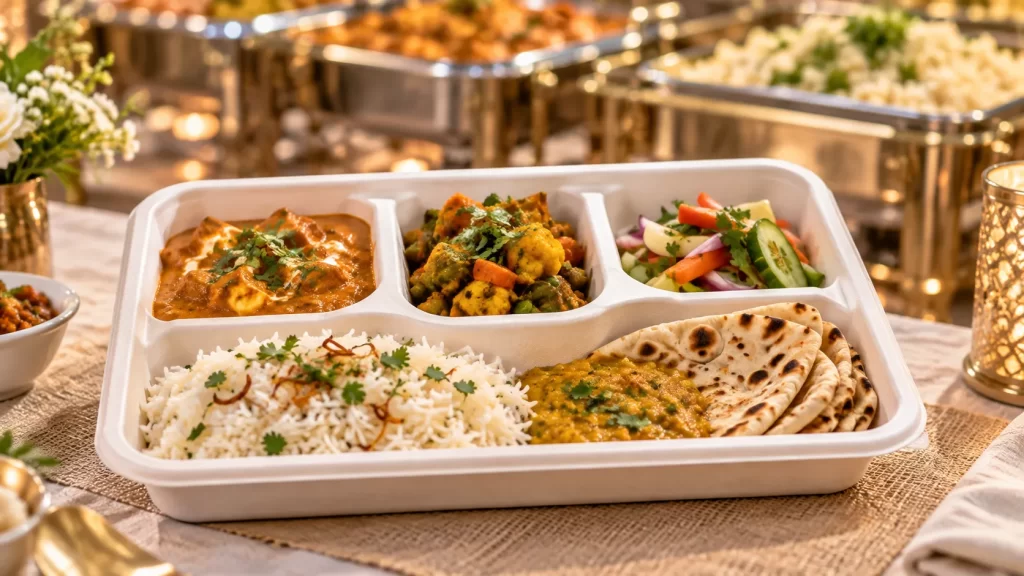
4. Consider Compartment Plates for Multi-Item Meals
When an event menu includes rice, vegetables, curries, salads, bread, or side dishes, compostable compartment plates can make service easier.
Separate sections help keep different foods apart and can reduce the need for multiple pieces of tableware.
They can be particularly useful for:
- Wedding catering
- Corporate lunches
- School and institutional meals
- Festivals
- Community events
- Outdoor catering
Compartment designs also help create a more organized presentation.
5. Make Sure the Plates Suit Hot and Oily Foods
This is one of the most important checks for catering.
A plate may look strong when empty but perform differently when loaded with hot food, sauces, or oily dishes.
Before purchasing, confirm the manufacturer’s specifications for:
- Hot food
- Wet foods
- Oily foods
- Sauces and gravies
- Microwave use, if required
- Refrigerated or cold food applications
Don’t rely only on a generic “compostable” label. Performance depends on the actual product construction and material.
Compostable Plates vs Plastic Plates
Both products can serve food, but their material properties and end-of-life considerations are different.
Feature | Compostable Plates | Plastic Plates |
Typical material | Plant fibers or other compostable materials | Petroleum-based or other plastics |
Renewable feedstock | Possible, depending on material | Generally no |
Compostability | Depends on product and conditions | Generally no |
Food service use | Yes, when properly specified | Yes |
Hot food performance | Product dependent | Product dependent |
Waste considerations | Requires suitable disposal conditions | Long-lasting waste |
Sustainability positioning | Supports plastic reduction goals | Less aligned with plastic reduction |
The choice should consider the actual product specification and available waste infrastructure, not just the material name.
Buying Compostable Plates in Bulk
Large events require more than a good product. They require dependable supply.
Before placing a bulk order, ask the supplier about:
Production Capacity
Can the manufacturer supply the required quantity within your event timeline?
Product Consistency
Are the dimensions, weight, shape, and finish consistent across batches?
Packaging
Are the plates packed securely for transportation and storage?
Lead Time
How much time is needed for production, quality checks, and dispatch?
Custom Requirements
If you need specific sizes, compartments, packaging, or branding, confirm whether customization is available.
Certifications and Documentation
For commercial food service, ask for relevant food-contact documentation and sustainability certifications where applicable. The exact documents required can depend on your destination market and intended use.
How Many Compostable Plates Do You Need?
Ordering too few plates creates a last-minute supply problem. Ordering far too many increases unnecessary inventory.
Start with the expected guest count and menu structure.
For example:
Expected guests × plates per guest = base requirement
Then account for:
- Multiple meal services
- Starters and desserts
- Staff meals
- Breakage or handling losses
- Unexpected guests
- Separate plates for specific food stations
For a large event, maintaining a reasonable reserve is usually more practical than ordering exactly to the calculated guest count.
Storage Matters Before the Event
Even a high-quality compostable plate can become difficult to use if stored incorrectly.
Keep disposable plates:
- In a clean, dry location
- Away from moisture
- Protected from dust and contamination
- Away from direct weather exposure
- In their original packaging until needed
Good storage helps maintain the product’s condition before it reaches the serving area.
What Should Event Organizers Ask a Supplier?
Before confirming a large order, ask these questions:
- What material are the plates made from?
- Are they suitable for hot, wet, and oily foods?
- What sizes and designs are available?
- Are compartment options available?
- What food-contact documentation is provided?
- What certifications apply to the specific product?
- What is the minimum bulk order quantity?
- What is the production lead time?
- How are products packaged for transport?
- Can samples be provided before a large order?
A supplier that can clearly answer these questions makes procurement easier and reduces surprises before the event.
Choosing a Compostable Plate Manufacturer
For large catering requirements, buying from a manufacturer can offer advantages over sourcing through multiple intermediaries.
A capable manufacturer may provide:
- Multiple plate designs and sizes
- Bulk production
- Consistent specifications
- Product documentation
- Export-ready packaging
- B2B supply support
- Samples for evaluation
For recurring catering requirements, consistency can be just as important as the initial purchase price.
Best Compostable Plates for Different Events
Weddings
Premium molded-fiber plates can provide a cleaner presentation while supporting an eco-conscious event theme.
Corporate Events
Standard or compartment plates work well for organized meal service, especially when meals include several components.
Festivals and Outdoor Events
Choose sturdy plates that can handle heavier meals and active service environments.
Institutional Catering
Compartment plates can simplify portioning and keep different foods separated.
Large Buffet Events
Large, rigid plates are useful when guests serve multiple food items at once.
Don’t Choose Plates Based on Price Alone
For large events, the cheapest plate isn’t necessarily the lowest-cost option.
A weak plate can cause:
- Food spills
- Increased waste
- Guest complaints
- Slower service
- Additional replacement requirements
A slightly higher-quality plate may provide better operational value when it performs reliably throughout a busy event.
The right comparison should consider cost per usable plate, not simply the listed unit price.
Final Thoughts
Choosing compostable plates for large events requires more than looking for an eco-friendly label. The best option needs to combine suitable material, strength, size, food compatibility, reliable supply, and appropriate end-of-life handling.
Sugarcane bagasse plates are one practical option for large-scale food service because molded bagasse products can provide the strength and functionality needed for catering applications while offering a plant-fiber alternative to conventional plastic tableware.
Before placing a bulk order, test the plates with your actual menu, confirm the manufacturer’s specifications, review relevant certifications, and make sure your event has an appropriate waste-management plan.
For caterers and event organizers, that combination of performance, sustainability, and dependable bulk supply is what makes compostable plates a practical choice for large events.