
Plastic waste has become one of the biggest environmental challenges around the world. Every day, millions of disposable plates, cups, and food containers are used once and then discarded. While these products offer convenience, they also contribute to overflowing landfills and long-term pollution because most plastics take hundreds of years to break down.
Fortunately, businesses and consumers now have access to smarter alternatives. One of the most promising solutions is bagasse packaging, a sustainable material made from sugarcane fiber. Instead of treating this natural fiber as agricultural waste, manufacturers transform it into strong, food-safe, and biodegradable packaging for restaurants, food delivery businesses, catering services, and everyday households.
In this guide, you’ll learn what bagasse packaging is, how it is made, why it is becoming a preferred alternative to plastic and paper, and how it supports a cleaner and more sustainable future. Whether you’re a restaurant owner, distributor, wholesaler, or simply looking for eco friendly packaging, this guide will help you understand why bagasse packaging is gaining popularity worldwide.
What Is Bagasse?
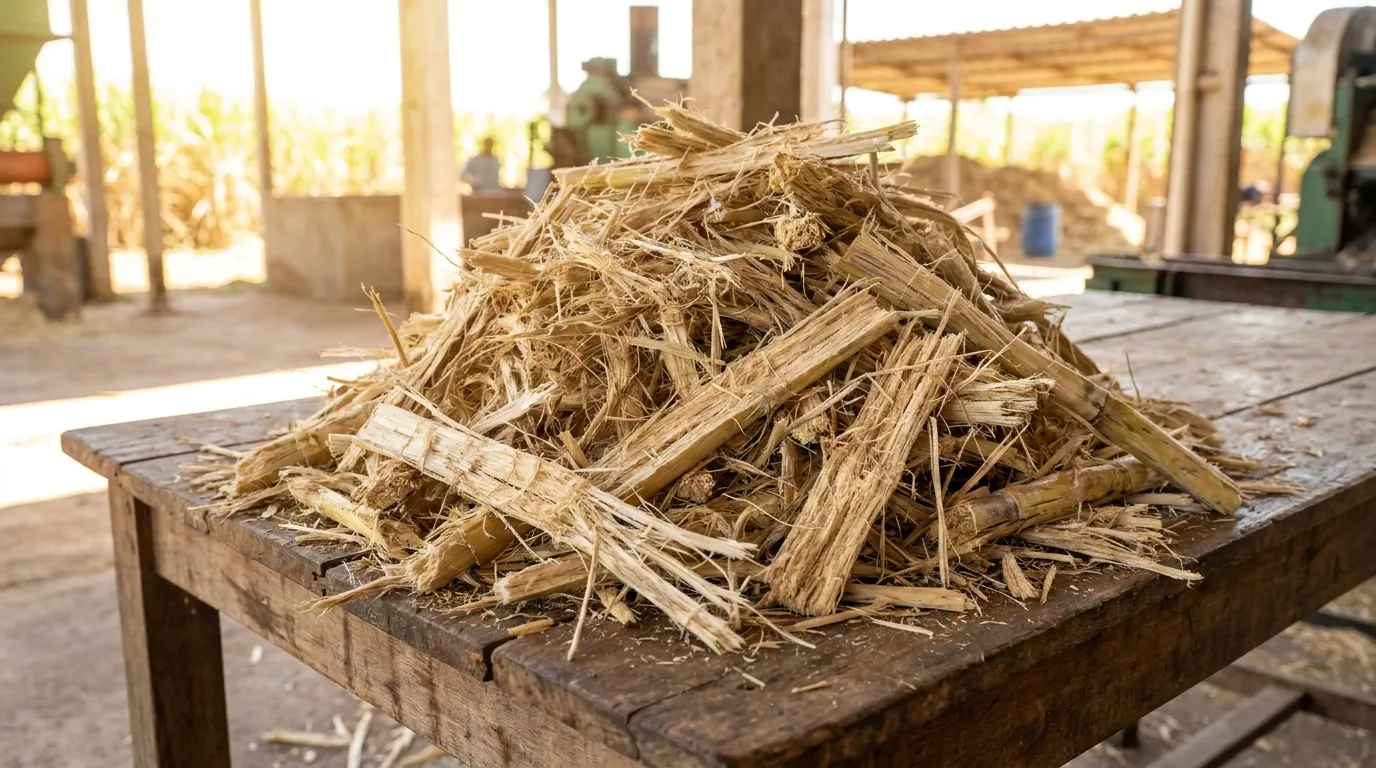
Bagasse is the natural fibrous material left behind after sugarcane stalks are crushed to extract their juice. For many years, this leftover fiber was considered agricultural waste and was often burned or discarded.
Today, however, bagasse has become an important raw material for producing sustainable products. Manufacturers convert this renewable sugarcane fiber into biodegradable packaging, disposable tableware, paper products, and molded fiber containers.
Because sugarcane is harvested every year, bagasse is a renewable resource that supports a circular economy by giving agricultural waste a second life.
Why Is Bagasse Valuable?
Unlike petroleum-based plastics, bagasse is naturally renewable and widely available in countries that produce sugarcane.
Its key advantages include:
- Made from renewable sugarcane fiber
- Utilizes agricultural waste efficiently
- Reduces dependence on plastic
- Supports sustainable manufacturing
- Naturally biodegradable and compostable
- Suitable for food-contact applications
As a result, bagasse has become one of the most important raw materials used in sustainable food packaging.
What Is Bagasse Packaging?
Bagasse packaging refers to food packaging products manufactured from processed sugarcane bagasse. Instead of relying on virgin paper pulp or petroleum-based plastics, manufacturers use molded bagasse pulp to create durable and environmentally responsible packaging.
Today, bagasse packaging is widely used across restaurants, cloud kitchens, cafés, hotels, food delivery services, supermarkets, airlines, hospitals, and catering companies.
Common products include:
- Bagasse plates
- Bagasse bowls
- Clamshell containers
- Meal trays
- Food containers
- Disposable cups
- Portion cups
- Takeaway packaging
These products provide excellent strength while reducing the environmental impact of disposable food packaging.
Why Is Bagasse Packaging Becoming So Popular?
Several factors have contributed to the rapid growth of bagasse packaging across the food service industry.
Plastic Ban Regulations
Many countries have introduced restrictions on single-use plastic products. Businesses are now actively searching for biodegradable alternatives that comply with changing regulations.
Consumer Demand
Customers increasingly prefer brands that use environmentally responsible packaging.
People now pay attention to:
Businesses adopting bagasse packaging often improve their brand image while meeting customer expectations.
Growth of Food Delivery
Online food delivery continues to grow worldwide.
Restaurants and cloud kitchens require food containers that are:
- Strong
- Leak resistant
- Heat resistant
- Suitable for takeaway meals
Bagasse packaging meets these requirements while reducing plastic waste.
What Is Bagasse Packaging and How Is It Made?
Although bagasse begins as agricultural waste, modern manufacturing transforms it into premium-quality food packaging through a carefully controlled production process.
Each stage is designed to improve product quality, food safety, and durability.
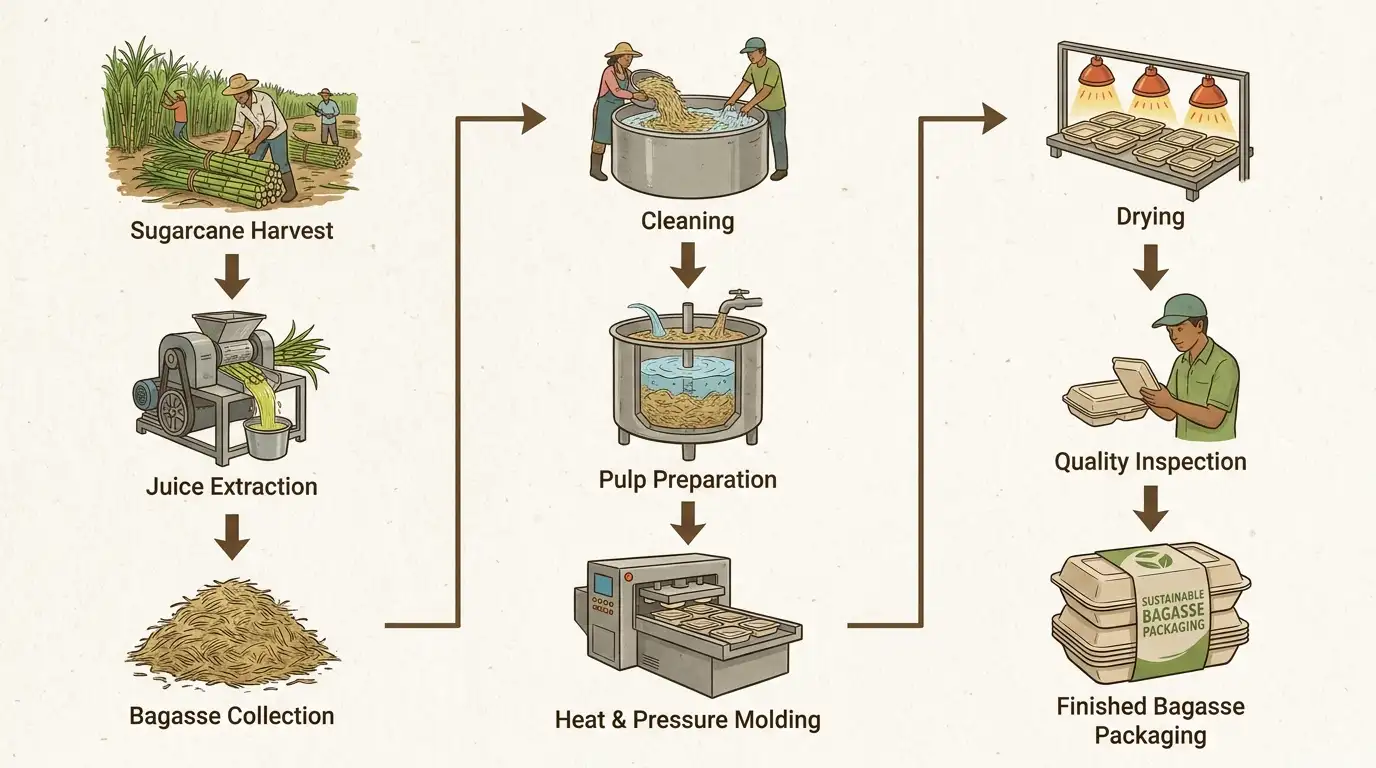
Step 1: Sugarcane Harvesting
The process starts with freshly harvested sugarcane.
After harvesting, sugar mills extract juice from the stalks for sugar production.
Meanwhile, the remaining fibrous material, called bagasse, is collected for further processing.
Instead of becoming waste, it becomes the primary raw material for biodegradable packaging.
Step 2: Cleaning the Bagasse
Next, the collected bagasse is thoroughly cleaned.
Dust, sand, and natural impurities are removed to prepare clean fibers suitable for food-grade production.
This step helps ensure:
- Better hygiene
- Consistent quality
- Safe food contact
Step 3: Pulp Preparation
After cleaning, manufacturers mix the fibers with water to create a smooth pulp.
Unlike many traditional packaging materials, bagasse pulp can often be formed without relying on large amounts of chemical binders.
This makes the manufacturing process more environmentally responsible.
Step 4: Precision Molding
The prepared pulp is poured into specially designed molds.
Manufacturers then apply:
- High pressure
- Controlled heat
- Precision forming
As a result, the pulp takes the shape of plates, bowls, meal trays, clamshell containers, and food packaging products.
Modern automated molding systems ensure consistent thickness and high production efficiency.
Step 5: Drying and Finishing
Once molded, each product goes through a controlled drying process.
Removing excess moisture increases:
- Structural strength
- Heat resistance
- Moisture resistance
- Durability
Manufacturers also trim rough edges to achieve a smooth, professional finish.
Step 6: Quality Inspection
Before packaging, every batch undergoes quality inspection.
Manufacturers check for:
- Product thickness
- Surface finish
- Leak resistance
- Heat resistance
- Food safety
- Product consistency
Only products that meet quality standards proceed to packaging.
Step 7: Hygienic Packaging
Finally, the finished products are packed under clean conditions.
They are then prepared for:
- Domestic distribution
- Wholesale supply
- Retail sales
- Export shipments
This process ensures that bagasse packaging reaches customers in excellent condition.
From Agricultural Waste to Sustainable Packaging
One of the biggest advantages of bagasse packaging is that it gives agricultural waste a valuable second purpose.
Instead of burning sugarcane residue, manufacturers convert it into useful food packaging that replaces plastic disposables.
This approach supports a circular economy by reducing waste while creating sustainable products for everyday use.
Why Bagasse Packaging Beats Plastic and Paper
Businesses today need food packaging that is practical, durable, and environmentally responsible. While plastic has been the standard for decades, changing regulations and growing environmental awareness are encouraging companies to adopt better alternatives. Bagasse packaging stands out because it combines performance with sustainability without compromising food safety or convenience.
Strong Enough for Everyday Food Service
Many people assume biodegradable packaging is weak, but high-quality bagasse packaging proves otherwise. Made from compressed sugarcane fiber, it is strong enough to hold hot meals, cold desserts, oily foods, curries, noodles, burgers, and takeaway dishes without losing its shape during normal use.
It is also suitable for microwave reheating and freezer storage, making it a practical choice for restaurants, cafés, cloud kitchens, and meal preparation businesses. As a result, food can be packed, transported, reheated, and served using the same container, reducing the need for additional packaging.
Another advantage is its resistance to oil and moisture. Unlike ordinary paper products that can become soggy, bagasse containers maintain their strength even when serving gravy, sauces, or greasy meals.
Naturally Biodegradable
One of the biggest reasons businesses choose bagasse packaging is its ability to decompose naturally under suitable composting conditions. Since it is made from renewable sugarcane fiber, it breaks down much faster than conventional plastic packaging.
Instead of remaining in landfills for hundreds of years, bagasse products can return to nature within a few months under proper composting conditions. Therefore, they help reduce long-term waste while supporting more responsible disposal practices.
Giving Agricultural Waste a New Purpose
Every sugarcane harvest leaves behind large quantities of bagasse after juice extraction. Rather than treating this material as waste, manufacturers transform it into biodegradable plates, bowls, meal trays, cups, and food containers.
Because of this, bagasse packaging supports a circular economy by turning an agricultural by-product into valuable food packaging. This approach reduces waste, conserves natural resources, and makes better use of renewable materials.
Everyday Applications of Bagasse Packaging
The versatility of bagasse packaging makes it suitable for both commercial and household use.
Restaurants and food delivery businesses rely on bagasse clamshell boxes, meal trays, bowls, and takeaway containers because they protect food during transportation while maintaining an attractive presentation. Customers also appreciate receiving meals in environmentally responsible packaging.
Catering companies use bagasse tableware for weddings, corporate events, exhibitions, and outdoor functions where large quantities of disposable products are required. In addition, schools, hospitals, cafeterias, and institutional kitchens choose bagasse products because they are lightweight, hygienic, and convenient to use.
At home, bagasse plates and bowls are ideal for birthday parties, family gatherings, festivals, picnics, and everyday meals. They offer the convenience of disposable tableware while helping reduce plastic waste.
Bagasse Packaging vs Plastic vs Paper
Choosing the right food packaging depends on performance, safety, and environmental impact. The comparison below highlights why bagasse packaging has become a preferred alternative.
| Feature | Bagasse Packaging | Plastic | Virgin Paper |
|---|---|---|---|
| Raw Material | Sugarcane Bagasse | Petroleum | Wood Pulp |
| Renewable Resource | ✔ | ✘ | Limited |
| Food Safe | ✔ | Depends on Material | ✔ |
| Microwave Safe | ✔ | Some Types | Limited |
| Freezer Safe | ✔ | ✔ | Limited |
| Oil & Water Resistance | Excellent | Excellent | Moderate |
| Biodegradable | ✔ | ✘ | ✔ |
| Compostable | ✔ | ✘ | Some Grades |
| Environmental Impact | Low | High | Moderate |
Overall, bagasse packaging provides an excellent balance between durability, food safety, and sustainability, making it suitable for modern food service businesses.
Economic and Environmental Impact
The benefits of bagasse packaging extend far beyond replacing plastic.
As demand for biodegradable food packaging grows, manufacturers continue investing in modern production facilities, advanced molding technology, and quality control systems. This creates employment opportunities in manufacturing, logistics, packaging, and exports.
Farmers also benefit because sugarcane bagasse, once considered agricultural waste, now has commercial value. Instead of being discarded or burned, it becomes an important raw material for sustainable manufacturing.
Furthermore, businesses that switch to bagasse packaging often improve their environmental image while meeting customer expectations for eco friendly products. Restaurants, cafés, supermarkets, and food delivery companies increasingly use sustainable packaging as part of their brand identity.
Why Businesses Are Choosing Bagasse Packaging
Companies are no longer selecting packaging based only on price. Today’s buyers also consider quality, food safety, customer experience, and environmental responsibility.
Bagasse packaging offers several practical advantages:
- Made from renewable sugarcane fiber
- Suitable for hot and cold food
- Microwave and freezer safe
- Resistant to oil and moisture
- Food-grade and non-toxic
- Biodegradable and compostable
- Strong enough for takeaway and delivery
- Helps reduce dependence on plastic
For wholesalers, distributors, exporters, restaurants, and food manufacturers, these benefits make bagasse packaging a reliable long-term solution.
Conclusion
As governments strengthen regulations on single-use plastics and consumers become more environmentally conscious, bagasse packaging is becoming an important part of the future of sustainable food packaging. Its ability to convert agricultural waste into strong, compostable products makes it an ideal solution for restaurants, catering businesses, food delivery companies, wholesalers, and retailers.
Whether you need disposable plates, bowls, food containers, meal trays, or clamshell boxes, choosing high-quality bagasse packaging supports both your business and the environment. Ultimately, selecting a trusted manufacturer, comparing product quality, and choosing food-grade packaging will help ensure reliable performance while contributing to a cleaner and more sustainable future.