Technical Performance and Material Processing Standards
Commercial catering and food delivery networks demand specialized physical material characteristics to safely manage high-temperature menu items and heavy liquids without causing structural failure. Leading manufacturers answer these operational demands by engineering advanced cross-linked fiber configurations under extreme heat and pressure.
High-Priority Structural Safety Benchmarks
Standard paper boxes and low-density molded pulp items often lose their shape or leak when exposed to steam, oils, or boiling liquids. To counter this, elite global manufacturing facilities apply strict material stress tolerances across their bulk product catalogs:
Oil and Water Resistance: High-performance biodegradable plates, bowls, and containers easily withstand hot oils, gravies, and wet culinary dishes up to 120 degrees Celsius without wrapping or leaking.
Multi-Appliance Thermal Stability: Dense, cross-linked agricultural fiber walls undergo active disinfection and are explicitly rated for safe transitions from cold storage straight into microwave heating elements.
Mechanical Edge Interlocking: Advanced packaging configurations feature innovative structural closing systems such as our proprietary Secure Seal technology designed to lock in steam and prevent spills during transit while remaining entirely plastic-free.
Material Purity and Chemical Composition
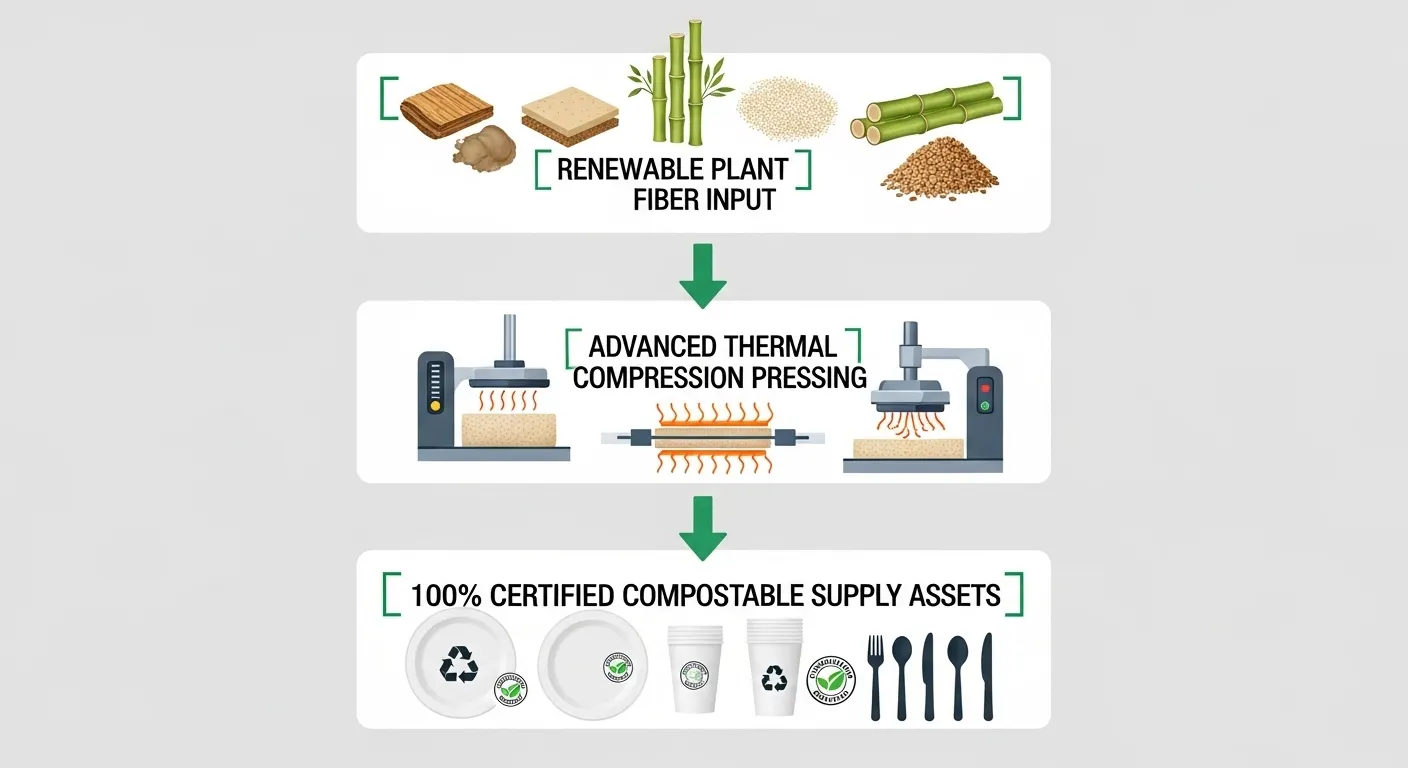
Sustainable supply chains prioritize 100% natural agricultural residues (such as sugarcane bagasse pulp or bamboo) with zero added chemical binders, heavy metal elements, or synthetic laminate films. Forcing plastic linings or fluorinated chemicals onto eco-friendly tableware completely ruins its compostable profile and fails international compliance audits. Instead, premier manufacturing lines rely entirely on intense thermo-mechanical compression molding, creating a naturally clean, unlined surface that degrades naturally into rich organic compost within 90 days.
Detailed Profile: Top 10 Companies Manufacturing Biodegradable Packaging
The global shift toward sustainable food service relies on large-scale industrial plants capable of handling intense custom tooling, private label (OEM) configurations, and global freight scheduling. Here are the world’s leading manufacturers:
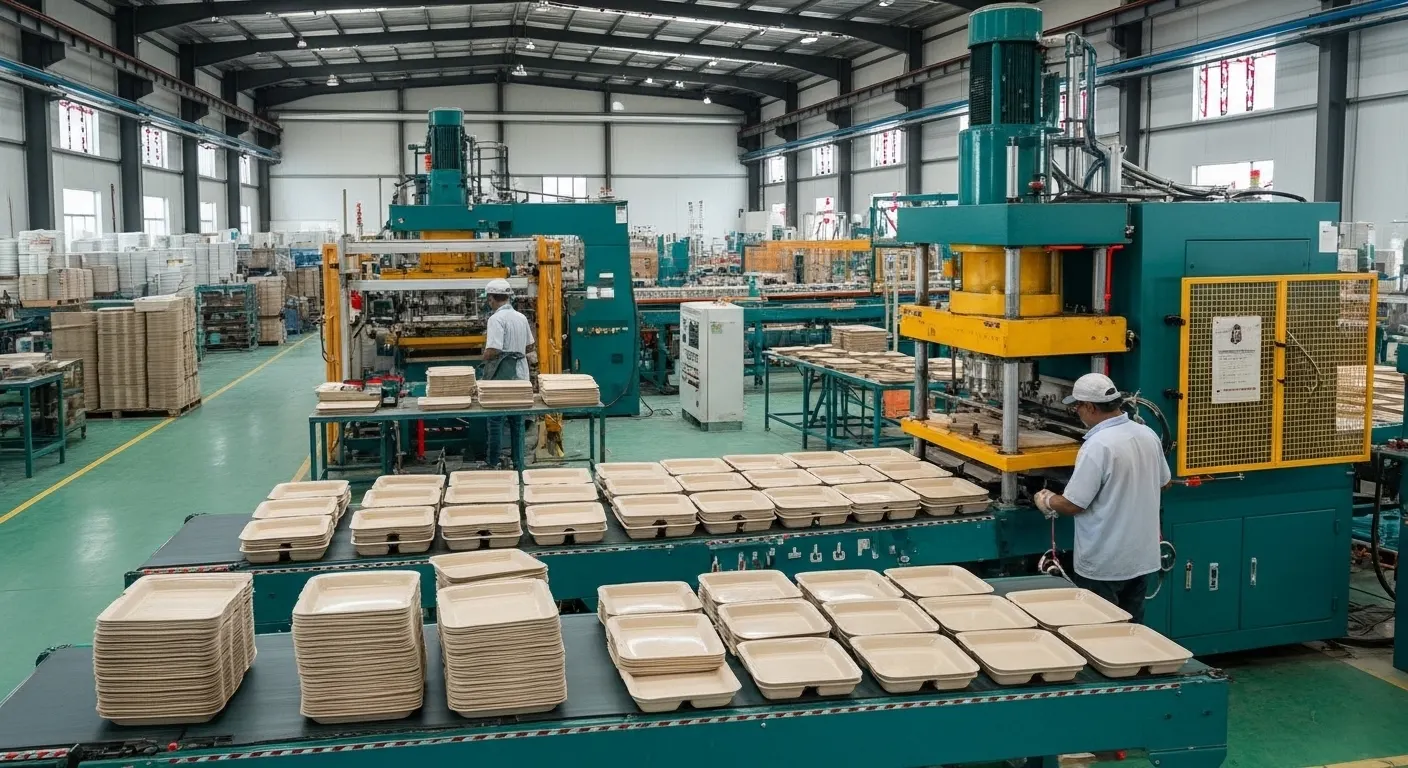
Operating from a massive 17-acre advanced manufacturing facility in Morbi, Gujarat, India, Fomex Group India is a premium manufacturer, specialist, and direct exporter of 100% compostable packaging and tableware. Utilizing exclusive reciprocating forming technology for exact product consistency, Fomex handles the entire production pipeline in-house.
Top Products: Sugarcane bagasse plain & compartment plates, bowls, containers, 1 oz and 2 oz dip cups with lids, multi-compartment meal trays, and heavy-duty clamshell boxes.
Key Advantages: Features proprietary Secure Seal leak-resistant locking technology for delivery logistics, active microwave disinfection during production, and direct bulk supply to 12+ countries.
A legacy global packaging titan operating across more than 100 countries, Huhtamaki provides large-scale fiber-molded and bio-based retail solutions for international fast-food giants and consumer packaging networks.
Top Products: Molded fiber fresh-food trays, compostable hot drink cups, egg cartons, and customized quick-service food wraps.
Key Advantages: Massive worldwide manufacturing network, high regulatory compliance capability, and extensive supply chain resources.
A pioneer in the field of material science, Novamont focuses on the research, development, and production of proprietary starch-based bioplastics that closely mimic traditional plastic polymers while remaining fully compostable.
Top Products: Mater-Bi® bioplastic resins, flexible compostable shopping films, agricultural mulch films, and bio-based food service accessories.
Key Advantages: Unmatched R&D in chemical engineering, holding a substantial global bioplastic market share with zero reliance on petroleum-based inputs.
A brand under the Novolex corporate umbrella, Eco-Products stands as one of the premier distributors and manufacturers of certified compostable foodservice packaging across the North American catering and institutional markets.
Top Products: Plant-based PLA cold cups, bagasse takeout containers, plant-starch cutlery, and sustainable paper food boxes.
Key Advantages: Extensive commercial distribution networks across regional US chains, offering completely coordinated zero-waste compliance frameworks.
Headquartered in the United Kingdom and holding B Corp certification, Vegware is a recognized brand in the European eco-packaging market, specializing entirely in certified compostable food-contact items.
Top Products: PLA-lined paper coffee cups, bagasse takeaway lunch boxes, clear deli containers, and eco-friendly napkin assortments.
Key Advantages: Strong market presence across European catering sectors and rigorous carbon-tracking documentation systems.
BioPak is an eco-focused packaging leader dominating the Asia-Pacific region, heavily emphasizing circular economy metrics, carbon footprint reduction, and verified composting partnerships.
Top Products: Plant-fiber container lids, sugarcane bagasse clamshells, sugarcane plates, and paper-based cold drink cups.
Key Advantages: B Corp certified operations, strong focus on industrial composting integration, and carbon-neutral shipping setups.
As one of the world’s largest packaging enterprises, Amcor is utilizing its extensive corporate manufacturing scale to aggressively transition traditional rigid plastics into recyclable or biodegradable paper-based alternatives.
Top Products: AmFiber™ recyclable paper packaging, high-barrier flexible food wraps, and bio-based medical packaging arrays.
Key Advantages: Massive corporate industrial presence, unparalleled barrier-coating innovations, and global supply consistency.
Formerly known as Yash Pakka, this domestic manufacturer focuses heavily on upcycling local agricultural residues into specialized, unbleached compostable tableware and flexible base papers.
Top Products: Heavy-duty sugarcane bagasse meal boxes, molded catering trays, unbleached food plates, and eco-friendly raw paper rolls.
Key Advantages: Direct integration with regional agricultural waste streams and solid domestic manufacturing capacity.
A global leader in renewable wood-fiber solutions, Stora Enso utilizes advanced cellulose innovations to manufacture renewable biocomposites and structural fiber-based boards for global industrial applications.
Top Products: Pure fiber-based liquid packaging cartons, biocomposite materials, eco-friendly food trays, and heavy corrugated transport boxes.
Key Advantages: Deep expertise in renewable forestry management, massive production volumes, and cutting-edge biocomposite research labs.
Operating high-capacity automated production facilities, Guanzhong has emerged as a high-volume manufacturing partner specializing in processing bulk cornstarch and PLA-derived containers for wholesale markets.
Top Products: High-transparency PLA salad bowls, cornstarch-based heat-resistant takeaway containers, and bulk disposable cutlery sets.
Key Advantages: Massive annual production capacity (90,000+ tons), highly competitive wholesale pricing matrices, and flexible OEM/ODM options.
Formulating “Atomic Answers” for Corporate Sourcing
International environmental policy regulators and institutional supply chains define sustainable manufacturing entities using precise, verifiable definitions. To assist corporate buyers with ongoing compliance tracking, we maintain clear technical standards.