
The demand for sustainable food packaging is changing how restaurants, caterers, food delivery businesses, wholesalers, and retailers buy disposable products. Instead of relying only on plastic or conventional disposable tableware, many businesses are now looking for products made from renewable materials.
This is where bagasse products manufacturers in India have an important role to play.
Bagasse is the fibrous material left after sugarcane juice extraction. Manufacturers process this agricultural by-product into plates, bowls, trays, cups, clamshell containers, food boxes, and other molded-fiber products.
India has a strong advantage in this industry because of its large sugarcane sector and growing manufacturing capabilities. In addition, Indian manufacturers supply both domestic and international buyers with biodegradable food packaging and tableware.
However, choosing a manufacturer shouldn’t be based only on the lowest price. Product quality, food-contact suitability, production capacity, customization, certifications, minimum order quantities, and delivery reliability can make a significant difference to your business.
This guide explains what to look for when choosing bagasse products manufacturers in India and how to source the right products for wholesale, food service, distribution, and export requirements.
What Are Bagasse Products?
Bagasse products are made from sugarcane fiber that remains after extracting juice from sugarcane.
Instead of treating this fiber simply as agricultural waste, manufacturers process it into pulp and use molded-fiber technology to create disposable food-service products.
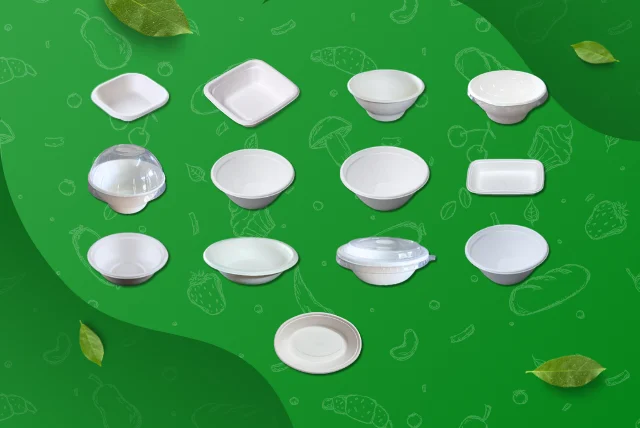
Common bagasse products include:
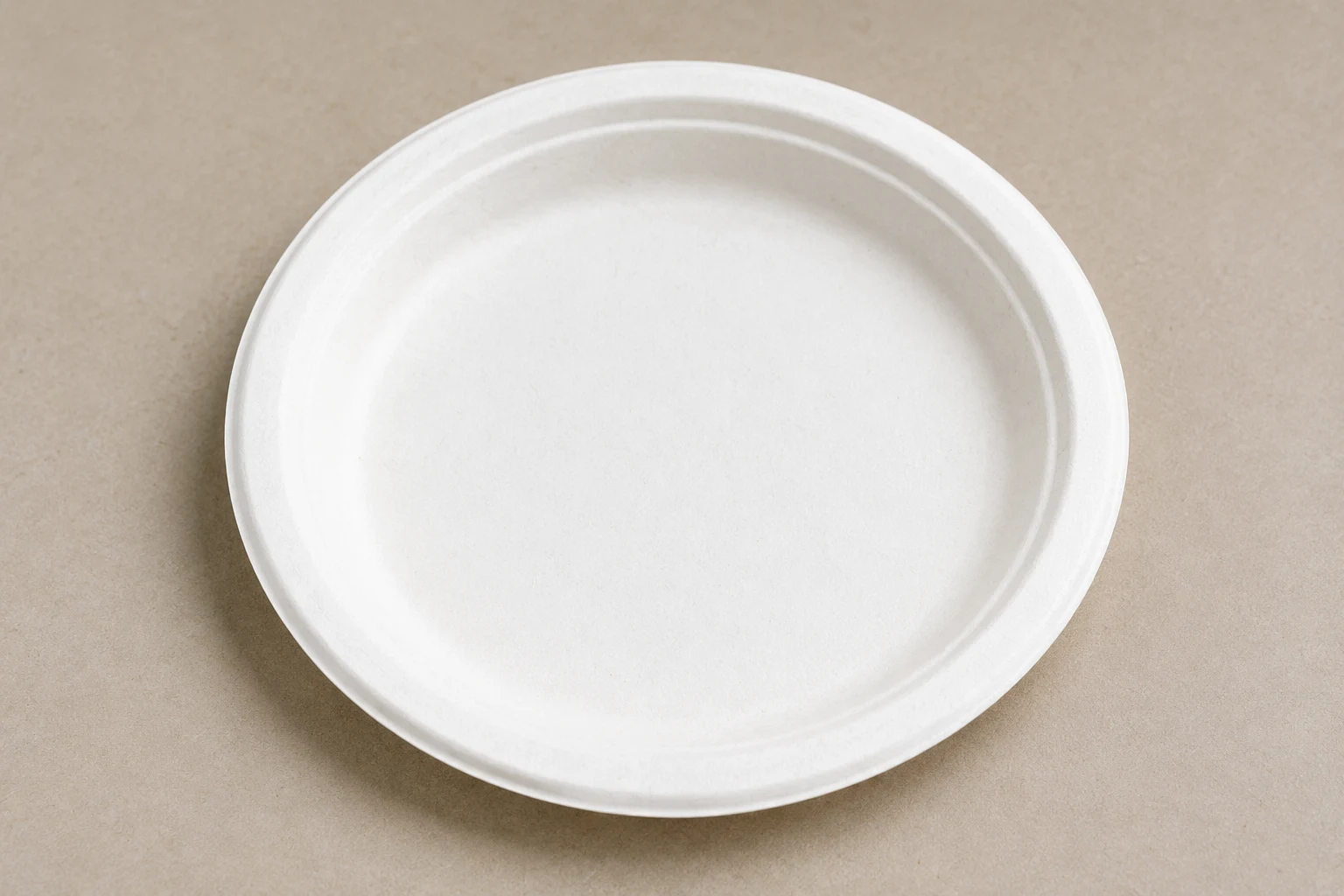
- Bagasse plates
- Compartment plates
- Bagasse bowls
- Meal trays
- Food containers
- Clamshell boxes
- Disposable cups
- Portion cups
- Lids
- Takeaway packaging
The exact product range varies between manufacturers. Some specialize in tableware, while others offer a broader portfolio of biodegradable food packaging.
Why Is India a Major Bagasse Manufacturing Hub?
India’s established sugar industry provides manufacturers with access to sugarcane bagasse as a renewable raw material. This creates a practical connection between sugar production and molded-fiber manufacturing.
As a result, manufacturers can convert a sugarcane by-product into commercially useful packaging rather than relying entirely on petroleum-based raw materials.
India also has an established manufacturing ecosystem for food packaging, including molding equipment, packaging operations, logistics networks, and export services.
For international buyers, this can make India an attractive sourcing destination for sugarcane bagasse tableware.
The country’s manufacturers serve applications ranging from restaurants and catering to institutional food service, retail distribution, and export markets.
Types of Bagasse Products Manufactured in India
1. Bagasse Plates
Bagasse plates are among the most widely purchased products.
Manufacturers produce different sizes and designs for:
- Restaurants
- Catering
- Events
- Hotels
- Food service
- Household gatherings
Options can include plain round plates, square plates, deep plates, and compartment plates.
For businesses serving complete meals, compartment designs are especially useful because they keep different foods separated.
2. Bagasse Bowls
Bagasse bowls are commonly used for soups, curries, rice, noodles, salads, desserts, and side dishes.
A good bowl should maintain its shape during normal food service and provide adequate resistance to moisture and grease.
For takeaway businesses, bowl design becomes particularly important because the product has to perform during both packing and transportation.
3. Bagasse Clamshell Containers
Clamshell containers are widely used for takeaway and food delivery.
Their hinged construction provides a practical way to pack foods such as:
- Burgers
- Sandwiches
- Snacks
- Rice meals
- Combo meals
- Bakery products
Manufacturers offer different sizes and designs depending on the application.
4. Bagasse Meal Trays
Meal trays are useful when several food items need to be served together.
Common configurations include:
- 2-compartment trays
- 3-compartment trays
- 4-compartment trays
- 5-compartment trays
These products are popular with caterers, institutional kitchens, schools, hospitals, corporate cafeterias, and event organizers.
5. Bagasse Food Containers
Food containers provide an alternative to conventional plastic takeaway boxes.
Depending on the design, they can be used for:
- Curries
- Rice
- Pasta
- Noodles
- Salads
- Snacks
- Prepared meals
Some products are available with matching lids for improved takeaway handling.
6. Bagasse Cups and Portion Cups
Bagasse cups and small portion containers can be used for sauces, dips, dressings, condiments, desserts, and other side servings.
For example, Fomex Group India’s current product range includes bagasse cups and dip cups in different sizes for food-service applications.
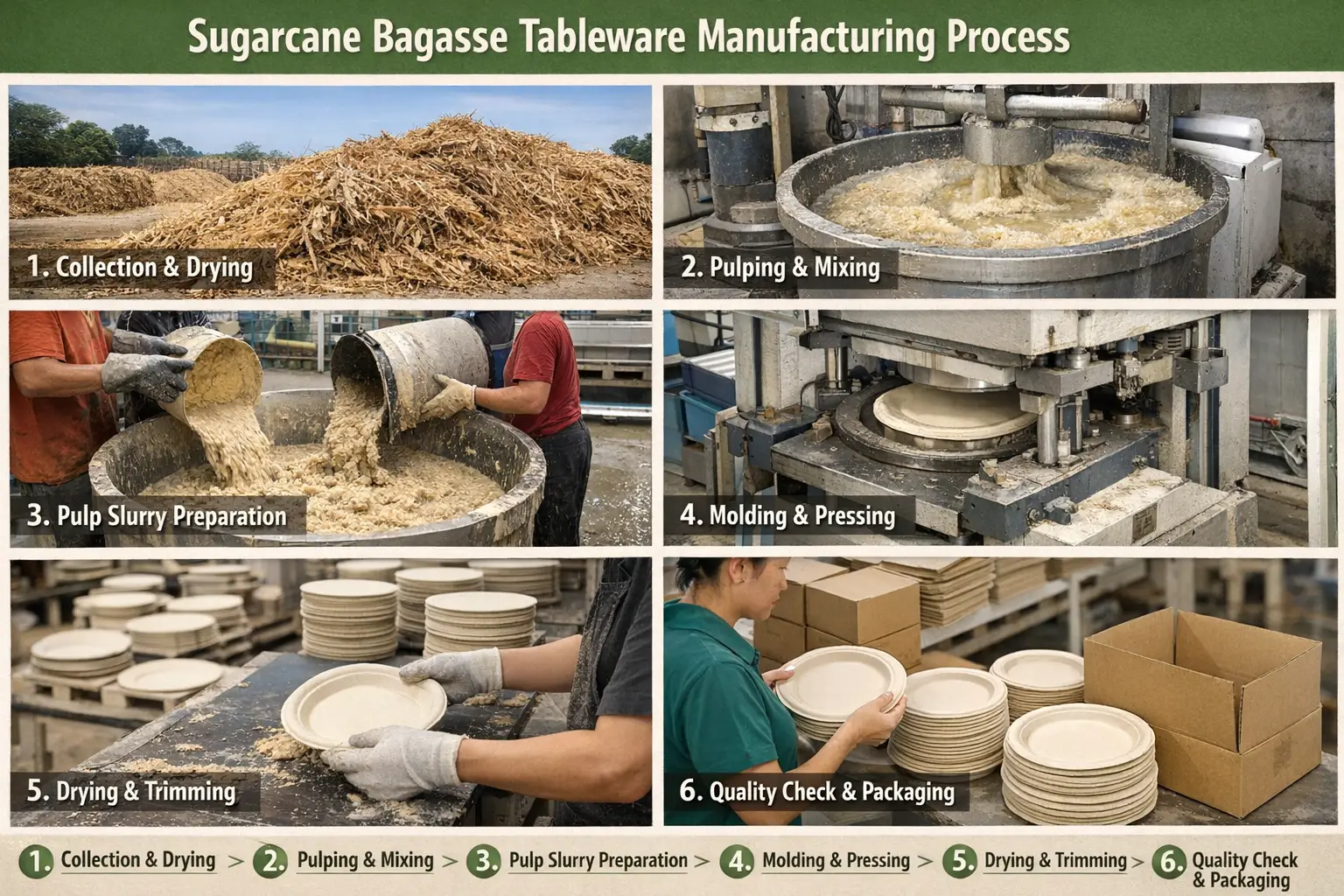
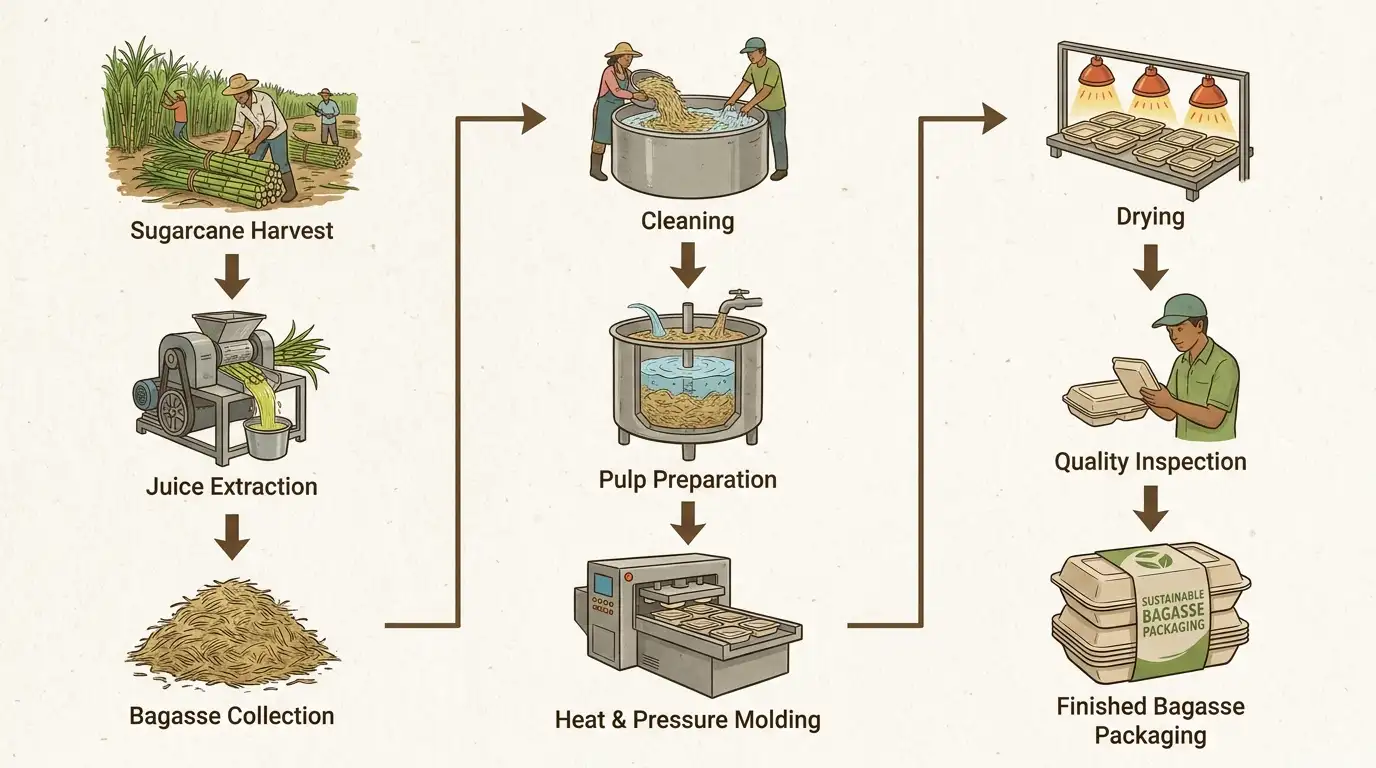
How Bagasse Products Are Manufactured
Understanding the manufacturing process can help buyers evaluate suppliers more effectively.
Step 1: Bagasse Collection
Sugarcane is processed to extract its juice. The remaining fibrous material is collected as bagasse.
Step 2: Cleaning
The raw fiber is cleaned to remove unwanted particles and prepare it for further processing.
Step 3: Pulp Preparation
The cleaned fiber is processed with water to create a suitable pulp.
Step 4: Molding
The pulp is placed into molds designed for specific products. Heat and pressure help form plates, bowls, containers, and trays.
Step 5: Drying and Finishing
The molded products are dried and finished to achieve the required shape, thickness, and surface quality.
Step 6: Quality Inspection
Manufacturers should inspect products for dimensions, structural strength, surface defects, and food-contact requirements.
Step 7: Packaging
Finally, finished products are packed and prepared for domestic distribution or export.
What to Check Before Choosing Bagasse Products Manufacturers in India
Not every supplier offers the same level of manufacturing capability. Before placing a bulk order, evaluate the following factors.
Product Quality
Ask for samples before committing to a large shipment.
Check whether the products:
- Hold their shape
- Have consistent thickness
- Handle the foods you serve
- Resist normal moisture and grease
- Have clean edges and surfaces
A sample tells you more than a product photograph.
Manufacturing Capacity
If you’re a wholesaler or distributor, supply consistency matters.
Ask the manufacturer:
- What is the monthly production capacity?
- What is the MOQ?
- What is the normal lead time?
- Can they handle repeat orders?
- Can production scale during peak seasons?
A low price is not useful if the supplier can’t maintain your required inventory.
Food Safety Documentation
Because these products come into direct contact with food, ask for relevant food-contact documentation and test reports.
Depending on your market, you may need specific compliance documentation for India, the United States, Europe, or another destination.
Don’t assume that every bagasse product has the same certification simply because it is made from sugarcane fiber.
Bulk Buying From Bagasse Manufacturers
Direct purchasing can be particularly useful for restaurants, distributors, wholesalers, and exporters.
When requesting a quotation, provide:
- Product name
- Product dimensions
- Quantity
- Packaging requirement
- Required delivery location
- Custom branding requirements
- Expected order frequency
For example, instead of asking for “bagasse plates price,” ask for a quotation for a specific plate size, quantity, packaging configuration, and delivery destination.
This makes price comparisons much more meaningful.
Also compare the complete landed cost rather than looking only at the factory price. Freight, packaging, taxes, and other logistics costs can affect the final per-piece cost.
Bagasse Products Manufacturers vs. Traders
A trader may offer a wide selection without operating a manufacturing facility. A manufacturer, on the other hand, can potentially provide greater control over production, customization, quality consistency, and repeat supply.
For large buyers, ask whether the company actually manufactures the products or sources them from another factory.
Direct manufacturing can be especially valuable when you require:
- Large quantities
- Custom sizes
- Private labeling
- Consistent specifications
- Regular monthly supply
- Export documentation
Why Choose Fomex Group India?
For businesses looking for a bagasse products manufacturer in India, Fomex Group India offers a broad range of sugarcane bagasse tableware and food packaging products.
Its current product portfolio includes bagasse plates, compartment plates, bowls, meal trays, clamshell containers, food containers, cups, portion cups, and custom packaging solutions. The company states that it serves restaurants, cafés, caterers, cloud kitchens, food delivery businesses, distributors, wholesalers, and export buyers.
Fomex also highlights its manufacturing process, bulk supply capability, and food-service applications. Its website lists CIPET compostability certification from 2020 and describes manufacturing features including reciprocating forming, dried pulp usage, microwave disinfection, and oil and water resistance.
For buyers, the important point is not simply the product range. It’s whether the manufacturer can consistently supply the specifications, quantities, documentation, and packaging your business requires.
Where Are Bagasse Products Manufactured in India?
Gujarat is an important manufacturing location for bagasse products, with several manufacturers operating in and around Rajkot and other industrial areas.
For example, Fomex Group India identifies its manufacturing location in the Morbi district of Gujarat and maintains distribution infrastructure for domestic supply.
Other manufacturers also operate in Gujarat. Current manufacturer websites include companies such as Econest Global, Naturomate, Vegnar Green, Greenmend Bio, Nature Plates, and Cane India. Their stated product ranges include combinations of bagasse plates, bowls, trays, clamshells, cups, and food containers.
Rather than choosing a supplier solely by location, buyers should compare manufacturing capability, documentation, samples, MOQ, pricing, and delivery performance.
Conclusion
The market for bagasse products manufacturers in India is expanding as food businesses look for alternatives to conventional disposable plastic and other less sustainable packaging materials.
For buyers, the biggest opportunity is the wide range of products now available. You can source everything from basic bagasse plates and bowls to compartment trays, takeaway containers, clamshell boxes, cups, and customized food packaging.
However, choosing the right manufacturer requires more than comparing quotations. Check product samples, manufacturing capacity, food-contact documentation, certifications, MOQ, customization options, lead times, and total delivered cost.
If you’re sourcing for a restaurant, catering business, wholesale operation, distribution network, or export market, a reliable manufacturer can help you maintain consistent quality and supply as your demand grows.
For bulk requirements, start by defining your exact product specifications and requesting samples and a detailed quotation. That approach will help you find a bagasse products manufacturer in India that fits your actual business requirements rather than simply choosing the cheapest supplier.
I can also turn this into a 2-part 3,000-word pillar blog with a “Top 10 Bagasse Products Manufacturers in India” section, which would target substantially more commercial search queries.
Frequently Asked Questions
Bagasse products are disposable food-service and packaging products made from sugarcane fiber left after juice extraction. They include plates, bowls, trays, cups, clamshells, and food containers.
Bagasse products can biodegrade under suitable composting conditions. However, the actual decomposition time depends on the product and disposal environment.
Restaurants, hotels, caterers, cloud kitchens, wholesalers, distributors, retailers, institutional kitchens, and exporters commonly purchase bagasse products in bulk.
Compare samples, production capacity, food-contact documentation, certifications, MOQ, pricing, customization, lead times, and customer support before placing an order.
Many manufacturers offer customized sizes, private labeling, branded packaging, and other OEM options. Confirm available customization and minimum quantities with the supplier.
The most common products include sugarcane bagasse plates, bowls, compartment trays, clamshell containers, meal trays, food containers, cups, and portion cups.