
A plate may only stay on your table for 20 minutes, but what happens to it after that matters. Traditional single-use plastic and thermocol products can remain in the environment long after the meal is over. That’s one reason restaurants, caterers, food delivery businesses, and households are looking for practical alternatives.
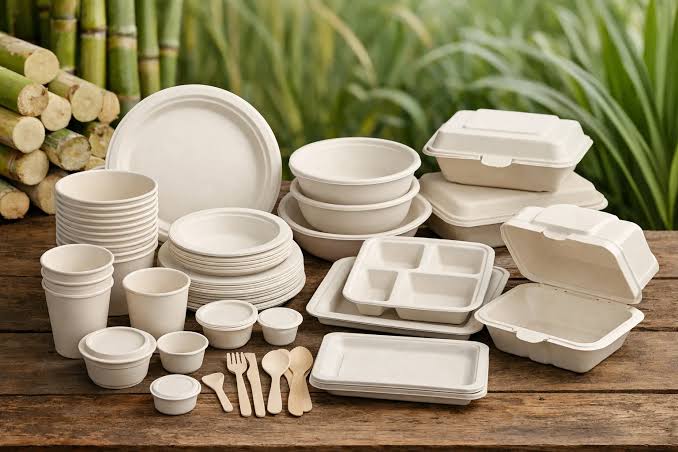
Bagasse tableware is one of those alternatives. It is made from the fibrous material left after juice is extracted from sugarcane. Instead of treating this fiber as waste, manufacturers process it into pulp and mold it into plates, bowls, trays, and food containers.
In India, where sugarcane is widely produced and restrictions apply to several single-use plastic products, sugarcane-based tableware has become increasingly relevant. More importantly, businesses don’t have to choose sustainability at the expense of everyday performance. Well-made bagasse products can handle many hot, oily, and moist foods commonly served in Indian restaurants and catering operations.
This guide explains how bagasse tableware is made, its key benefits, available product types, pricing considerations, and how it compares with paper and PLA alternatives.
What Is Bagasse Tableware and How Is It Made?
Bagasse is the dry, fibrous material that remains after sugar mills crush sugarcane stalks and extract their juice. This leftover biomass contains cellulose-rich fibers that manufacturers can process into molded fiber products.
The idea is simple. Instead of using fresh petroleum-based plastic to make a disposable plate, manufacturers give an existing agricultural by-product another useful life.
How Sugarcane Pulp Manufacturing Works
The process generally follows several stages.
1. Bagasse collection
First, sugarcane is crushed for juice extraction. The remaining fibrous bagasse is collected instead of being treated only as waste.
2. Cleaning and pulping
Next, manufacturers clean the fibers to remove unwanted material. They then process the cleaned bagasse with water to create workable sugarcane pulp.
3. Molding
The prepared pulp enters shaped molds for products such as plates, bowls, compartment trays, and clamshell containers.
4. Heat pressing
Heat and pressure help form the pulp into a rigid shape. This stage gives the finished product much of its strength and smooth surface.
5. Trimming and quality checks
Finally, the molded products are trimmed and inspected for shape, thickness, finish, and performance before packaging.
The result is biodegradable disposable tableware made primarily from renewable sugarcane fiber rather than conventional plastic.
Top 5 Benefits of Switching to Sugarcane Bagasse Products
1. Biodegradable and Compostable
One of the main reasons people choose bagasse tableware is its end-of-life potential.
Because bagasse comes from plant fiber, suitable products can biodegrade and compost under appropriate conditions. Some bagasse products may break down in roughly 30 to 90 days under controlled composting conditions, although actual decomposition time depends on temperature, moisture, product composition, and the composting system.
That distinction matters. A product won’t necessarily disappear within 90 days simply because it’s thrown into a landfill.
For businesses trying to reduce long-term disposable waste, however, certified compostable tableware can provide a meaningful alternative to conventional plastic.
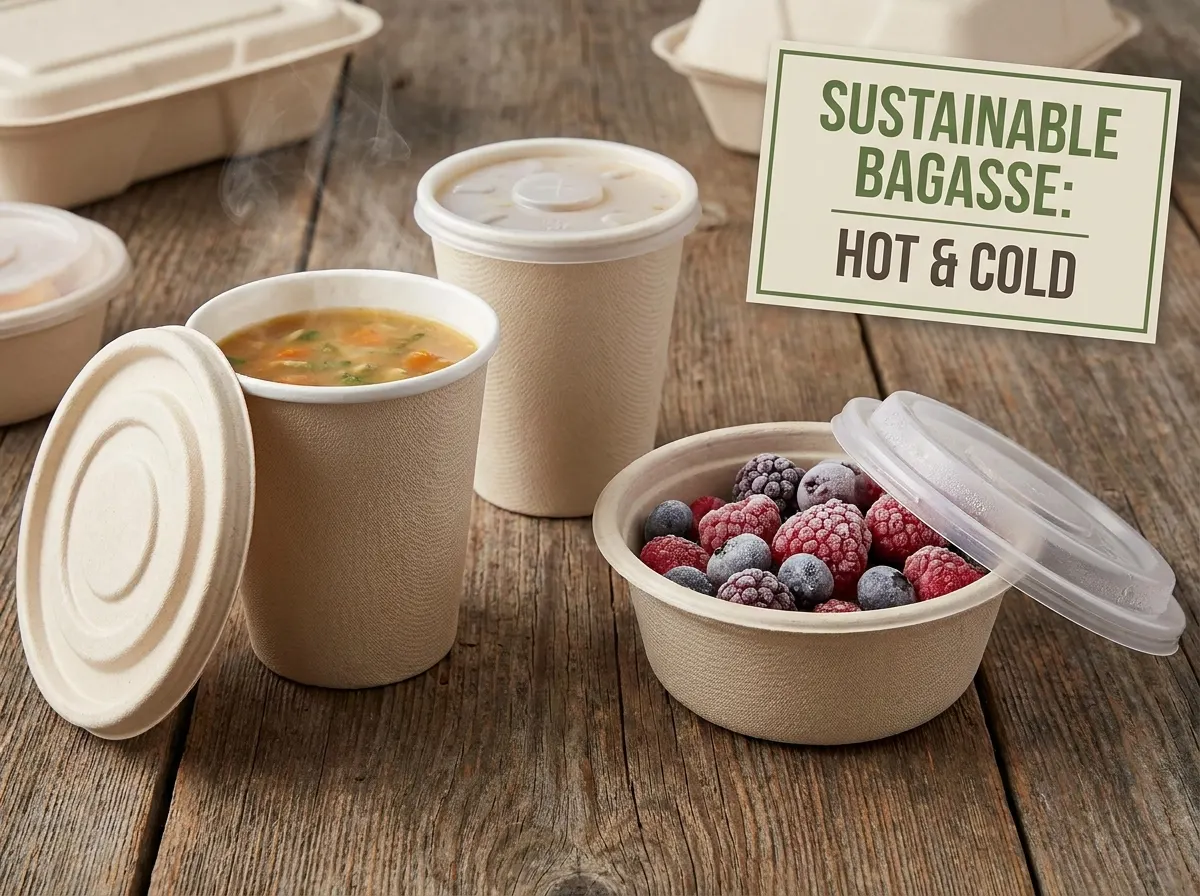
2. Suitable for Hot, Cold, Microwave and Freezer Applications
Food packaging has to perform before its environmental benefits matter.
A restaurant serving hot dal, curry, rice, noodles, or biryani needs a plate that stays firm during the meal. Likewise, a cloud kitchen needs containers that can survive packing, transport, and normal handling.
Many bagasse products are designed for hot and cold foods and may also be suitable for microwave reheating and freezer storage. Some products are rated for temperatures around 120°C, but temperature limits vary by manufacturer and product.
Therefore, buyers should always check the manufacturer’s specifications instead of assuming every bagasse product has the same heat tolerance.
3. Heavy-Duty and Resistant to Grease and Moisture
Thin disposable plates can become frustrating when they meet a heavy Indian meal.
Curries, gravies, chutneys, rice, and oily snacks put much more pressure on tableware than dry foods. Quality sugarcane bagasse plates have a rigid molded-fiber structure that helps them remain firm during normal food service.
Likewise, well-designed bagasse clamshell containers can make takeaway orders easier to pack and transport.
Buyers should still test samples with the foods they actually serve. Leak and grease resistance can differ by product design, thickness, formulation, and manufacturer.
4. Food-Safe Options Are Available
Food safety should never be assumed simply because a product is plant based.
Reputable bagasse tableware manufacturers should be able to provide information about food-contact suitability, materials, testing, and relevant certifications.
If you’re purchasing for commercial use, ask specifically about:
- Food-contact testing
- PFAS policy or test reports where relevant
- Product composition
- Microwave suitability
- Temperature limits
- Compostability certification
- Export-market compliance
Also check whether a specific product uses coatings or additives. Claims such as “chemical-free,” “toxin-free,” or “PFAS-free” should be supported by documentation rather than assumed for all bagasse products.
5. Makes Better Use of Sugarcane By-Products
Bagasse already exists because of sugar production. Turning this fibrous residue into plates and containers creates another use for an agricultural by-product.
As a result, sugarcane bagasse products fit naturally into the idea of a circular economy. Materials that might otherwise have limited uses can become practical food delivery packaging and tableware.
For businesses, this provides a straightforward way to reduce reliance on conventional disposable plastic without completely changing how meals are served.
Types of Bagasse Disposable Tableware Available
Bagasse isn’t limited to basic dinner plates. Modern molding allows manufacturers to produce products for restaurants, caterers, events, institutional dining, takeaway, and household use.
Bagasse Plates and Compartment Trays
Eco friendly plates are available in different diameters, shapes, and depths for snacks, meals, desserts, and catering.
For serving complete meals, compartment designs are particularly useful.
Common options include:
- 3 compartment bagasse tray
- 4 compartment meal tray
- 5 compartment bagasse plate
- Round dinner plates
- Square plates
- Snack plates
A 3 compartment bagasse tray, for example, lets caterers separate curry, rice, and side dishes without using several individual bowls.
Sugarcane Bowls and Clamshell Containers
Sugarcane bagasse bowls work well for curries, salads, noodles, rice dishes, desserts, and other foods.
Meanwhile, bagasse clamshell containers are popular for takeaway operations because the hinged design combines the base and lid in one product.
Restaurants can use them for burgers, sandwiches, snacks, combo meals, and many other takeaway applications.
Eco Friendly Cutlery and Cups
Some suppliers also sell cups, lids, spoons, forks, and related disposable food-service products alongside their bagasse ranges.
However, buyers should check the material of each item. Not every product sold as part of an “eco friendly tableware” range is necessarily made from bagasse.
Bagasse Tableware Price and Wholesale Market in India
Price is often one of the first questions buyers ask, but there isn’t one fixed bagasse tableware price.
The final cost depends on:
- Plate or container size
- Number of compartments
- Thickness
- Product design
- Order quantity
- Packaging
- Custom branding
- Freight
- Raw material and manufacturing costs
Retail packs containing roughly 25 to 100 pieces may sometimes fall in the ₹180 to ₹600 range depending on the product and seller.
For B2B purchasing, individual products can sometimes fall around ₹2 to ₹4 per piece, but this should only be treated as a broad market reference. Larger clamshells, compartment trays, premium products, and customized items may cost considerably more.
Therefore, businesses searching for wholesale disposable plates price or sugarcane pulp plates bulk should request current quotations based on their exact specifications and quantities.
Bulk buyers can compare manufacturers directly or use B2B marketplaces such as IndiaMART to identify potential suppliers. Before ordering, compare samples, certifications, MOQ, lead times, freight, and total landed cost, not just the per-piece price.
Bagasse vs. PLA vs. Paper Plates: Which Is Better?
No material is perfect for every application. However, the differences become clearer when you compare their source, performance, and disposal requirements.
| Factor | Bagasse | PLA | Paper |
|---|---|---|---|
| Main Source | Sugarcane fiber | Plant-derived bioplastic | Wood pulp |
| Uses Agricultural By-Product | Yes | Usually no | No |
| Rigidity | High | Varies | Varies |
| Handles Oily Foods | Generally good | Product dependent | Coating dependent |
| Compostability | Product and conditions dependent | Usually requires industrial composting | Depends on coatings/additives |
| Common Uses | Plates, bowls, trays, clamshells | Cups, lids, containers | Plates, bowls, cartons |
| Plastic-Free by Default | Depends on formulation | No | Depends on coating |
For heavy meals and takeaway applications, bagasse often stands out because molded sugarcane fiber provides good rigidity without requiring the product to look or feel like conventional plastic.
Paper can also work well, but some paper food packaging relies on barrier coatings for moisture or grease resistance. PLA, meanwhile, is plant derived but remains a bioplastic and typically needs specific industrial composting conditions.
The best choice ultimately depends on the food, disposal infrastructure, certification requirements, and intended use.
Conclusion: Where to Buy Bagasse Tableware in India
Bagasse tableware has moved beyond being a niche environmental product. For restaurants, caterers, cloud kitchens, event organizers, distributors, and households, it can provide the strength and convenience expected from disposable tableware while making productive use of sugarcane fiber.
Still, don’t choose a product simply because the packaging says “eco friendly.” Check its food-contact documentation, composability claims, heat limits, material composition, and performance with the foods you actually serve.
Businesses looking for established Indian suppliers can evaluate manufacturers and brands such as Fomex, along with other qualified bagasse tableware manufacturers.
Before committing to a large order, request samples and test them with real meals. A plate that can comfortably handle curry, rice, oil, heat, and everyday handling will tell you far more about its quality than an “eco friendly” label alone.